
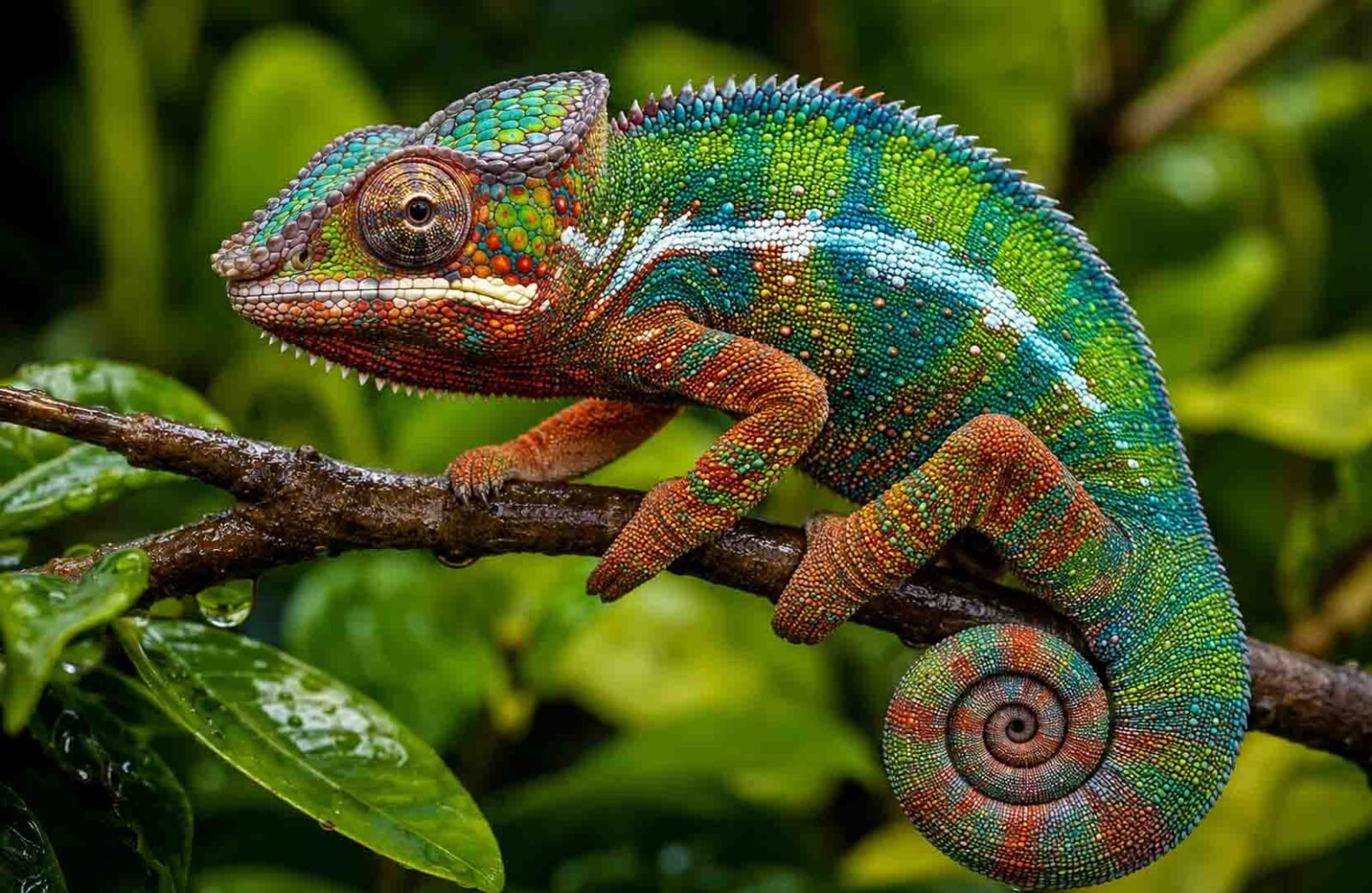
Have you ever seen an animal change its color and wondered how it does that? That is one of the reasons why people find chameleons so interesting. These reptiles look almost magical at first sight. Their moving eyes, long tongue, and calm way of walking make them very different from many other animals.
The family known as Chameleónovité includes all true chameleons. These reptiles have lived on Earth for millions of years and have developed many special skills that help them survive. They are not known for speed or strength. Instead, they use smart survival tricks that work very well in nature.
Many people only know chameleons because of their color-changing skin. While that is impressive, it is only one part of their story. Chameleónovité also have amazing eyes, strong gripping feet, and a tail that helps them hold onto branches while moving through trees.
Scientists, animal lovers, and nature experts continue to study these reptiles because they are full of surprises. Every part of their body has a purpose. Their skills help them find food, avoid danger, and live safely in places where many other animals would struggle.
In this article, we will explore everything about Chameleónovité. We will learn where they live, how they change color, how they hunt, and why they are some of the most amazing reptiles in the world today.
What Are Chameleónovité?
Chameleónovité is the family name used for all true chameleons. In science, this family is called Chamaeleonidae. It includes more than 200 known species. Even though these species may look different from one another, they all share many special features.
These reptiles belong to a larger group called Squamata. This group also includes snakes and other lizards. Long ago, chameleons followed their own path and slowly developed unique skills that made them different from their relatives.
Unlike many animals that depend on speed, Chameleónovité survive through patience and careful movement. They often stay still for long periods and wait for the right moment to act. This simple strategy helps them save energy and avoid danger.
One reason people admire Chameleónovité is their ability to adapt. They can adjust to different surroundings, climates, and living spaces. Over time, this ability helped them spread into different parts of the world and survive in many environments.
Today, these reptiles are known as some of nature’s best examples of adaptation. Their body shape, behavior, and hunting style all show how animals can develop special tools to fit their surroundings perfectly.
Where Chameleónovité Live
Most species of Chameleónovité live in Africa and Madagascar. These areas provide the warm weather, plants, and safe hiding places that chameleons need. Some species also live in southern Europe, the Middle East, India, Sri Lanka, and other parts of Asia.
Madagascar is especially important when talking about chameleons. Around half of all known chameleon species live there. Many of these species cannot be found anywhere else on Earth. This makes Madagascar one of the most important places for chameleon life.
Different species live in different environments. Some prefer thick rainforests filled with tall trees and heavy shade. Others live in mountain forests where the weather is cooler and the land is rocky.
There are also species that live in open woodlands, bushes, savannas, and dry areas. Even though these places look very different from each other, chameleons have learned how to survive in all of them.
The place where a chameleon lives often affects its color, size, and behavior. This is one reason why there are so many different species. Nature shaped each one to fit its own home as perfectly as possible.
Why Chameleónovité Are So Special
When people think about Chameleónovité, they often think about color changes. But these reptiles have many other amazing features too. Their whole body is designed to help them live safely in trees and plants.
Their eyes can move separately. Their tongue can shoot out very quickly. Their feet grip branches firmly. Their tail helps them stay balanced high above the ground. Together, these features make them very skilled survivors.
Another special thing about Chameleónovité is their slow movement. At first, this may not seem helpful. However, moving slowly helps them avoid being noticed by predators and insects. It also saves energy throughout the day.
Many species gently rock back and forth while walking. This movement looks like a leaf moving in the wind. Because of this simple trick, other animals may not even notice that a chameleon is nearby.
Over millions of years, these reptiles developed one useful feature after another. Today, they are considered some of the most unique reptiles in the world because so many special skills work together in one animal.
How Chameleónovité Change Color
The most famous skill of Chameleónovité is their ability to change color. Many people believe they do this only to hide from danger. While camouflage is important, it is not the only reason for color change.
Chameleons also change color to communicate with other chameleons. Bright colors can show strength, confidence, or interest in finding a mate. Darker colors may show fear, stress, or a need for warmth.
Inside their skin are special cells that help create these color changes. Some cells contain pigments, while others reflect light. Together, these layers help produce many different shades and patterns.
Scientists have discovered that tiny structures inside the skin can change how light is reflected. This allows some species to show greens, blues, yellows, reds, and other colors. It is one of the most impressive natural systems found in animals.
Color change also helps with temperature control. Dark colors absorb more heat from sunlight. Lighter colors reflect more heat. Because of this, Chameleónovité can use color changes to help manage their body temperature during different weather conditions.
Chameleónovité Eyes and Sharp Sight
The eyes of Chameleónovité are among the most amazing eyes in the animal world. Each eye can move on its own. This means a chameleon can look in two different directions at the same time without moving its head.
Imagine sitting in a tree and watching for food while also looking for danger behind you. That is exactly what these reptiles can do. Their eye system gives them a very wide view of the world around them.
When a chameleon spots an insect, both eyes quickly focus on the same target. This helps the animal judge distance very accurately. Knowing the exact distance is important because the tongue must hit the target perfectly.
Their eyesight is so sharp that they can spot tiny insects from far away. Even small movements on leaves or branches can be noticed. This gives them a huge advantage when hunting.
Good vision is one of the main reasons Chameleónovité are successful hunters. Their eyes help them find food, avoid danger, and understand what is happening around them almost all the time.
The Fast Tongue of Chameleónovité
After locating prey with their eyes, chameleons use another amazing tool. Their tongue is one of the fastest hunting weapons in nature. It allows them to catch food without running or chasing it.
Most of the time, a chameleon waits quietly and watches. When an insect comes close enough, the tongue shoots out in a split second. The movement is so fast that many people cannot see it clearly.
The tongue is long, sticky, and very powerful. In some species, it can stretch to a distance that is longer than the chameleon’s own body. The sticky tip grabs the insect and pulls it back quickly.
Scientists have found that this speed comes from stored energy inside special tissues. The tongue does not rely only on muscle power. This system allows the tongue to move with incredible speed and force.
Thanks to this hunting method, Chameleónovité can catch insects while staying hidden and safe. Their patience, eyesight, and tongue work together perfectly, making them highly effective hunters in the wild.
Chameleónovité Feet and Tail
Chameleónovité are made for life on branches. Their feet are very special because their toes work like small clamps. This helps them hold thin branches without falling. Even when a branch moves, they can stay steady and safe.
Their toes are grouped in a smart way. Some toes face one side, and some face the other side. This gives them a strong grip. It is one big reason why these reptiles can move so well in trees, bushes, and thick plants.
Their tail is also very helpful. Many Chameleónovité have a strong tail that can wrap around branches. This tail works almost like an extra hand. It helps them balance while they climb or reach for another branch.
When a chameleon walks slowly through leaves, its feet and tail work together. The feet hold the branch, and the tail gives extra support. This makes each step safer. It also helps the animal stay hidden from birds, snakes, and other hunters.
What Chameleónovité Eat
Chameleónovité mostly eat insects. Their common food includes crickets, flies, beetles, grasshoppers, moths, and other small insects. They do not need to chase food like fast animals. They wait quietly and strike only when the time is right.
This slow hunting style saves energy. A chameleon may sit on a branch and watch the area for a long time. When an insect moves close, it uses its sharp eyes and fast tongue to catch it in a moment.
Some bigger species can eat more than insects. They may sometimes eat small lizards, small birds, or other tiny animals. Still, insects are the main food for most chameleons in the wild.
This feeding habit also helps nature. By eating insects, Chameleónovité help control insect numbers. This can protect plants, leaves, and trees from too much insect damage.
How Chameleónovité Behave
Chameleónovité are usually calm and quiet animals. They do not like noisy or busy places. Most of them spend much of the day alone in trees, bushes, or plants. They move only when they need food, warmth, shade, or a safer place.
Their slow walk is not a weakness. It is a smart survival trick. Many chameleons rock gently while walking. This makes them look like leaves moving in the wind. It helps them stay hidden from both prey and danger.
Most Chameleónovité are solitary. This means they prefer to live alone. They usually meet other chameleons only when it is time to mate or when one enters another’s space.
When males feel threatened, they may puff up their bodies, open their mouths, and show bright colors. These actions make them look bigger and stronger. Often, this warning is enough to stop a fight before it starts.
How Chameleónovité Have Babies
Most Chameleónovité lay eggs. The female usually digs a small hole in soil or soft leaf litter. Then she lays her eggs inside, covers the nest, and leaves. After that, the eggs grow on their own.
The number of eggs can be different from species to species. Some lay only a few eggs, while others lay many. The time needed for the eggs to hatch can also change. It may take several months, and in some cases, more than a year.
Some chameleon species do not lay eggs. They give birth to live babies. This is more common in cooler mountain areas. Live birth can help protect babies while they grow inside the mother’s body.
Baby chameleons are tiny, but they are ready for life very quickly. They can climb, hide, and hunt small insects soon after birth or hatching. Still, life is not easy for them. Many young chameleons are eaten by birds, snakes, and other animals.
Why Chameleónovité Matter in Nature
Chameleónovité are not just beautiful reptiles. They also have an important role in nature. They eat many insects, which helps keep insect numbers balanced. This supports plants, trees, and other living things around them.
They are also part of the food chain. Birds, snakes, and small mammals may hunt chameleons. This means chameleons are both hunters and prey. Their life connects them to many other animals in the same ecosystem.
Scientists also see Chameleónovité as signs of environmental health. When their numbers drop, it can mean their habitat is in trouble. This may show problems like forest loss, climate change, or pollution.
Because they are sensitive to changes around them, they help us understand nature better. Protecting chameleons also means protecting forests, plants, insects, and many other animals that share the same home.
Problems Chameleónovité Face
Many Chameleónovité face serious problems today. One of the biggest problems is habitat loss. Forests are cut down for farming, roads, homes, and cities. When trees disappear, chameleons lose their safe places to live, hide, and hunt.
Madagascar is one of the most important places for chameleons, but many forests there are under pressure. Since many species live only in that one place, losing forest can be very dangerous for them.
Climate change is another problem. Chameleons need the right heat, light, and moisture to stay healthy. When rain patterns change or temperatures rise, some species may struggle to survive.
The illegal pet trade is also harmful. Some chameleons are taken from the wild and sold as pets. This can reduce wild numbers and hurt local populations. Strong rules, safe breeding, and better education can help protect them.
Chameleónovité as Pets
Many people like Chameleónovité because they look special and beautiful. Their colors, eyes, and slow movements make them fun to watch. But keeping them as pets is not easy. They need very careful care every day.
A pet chameleon needs a tall cage with many branches and plants. It also needs the right heat, humidity, and UVB light. Without these things, it may become weak or sick.
Their food must also be correct. Most pet chameleons eat live insects. These insects often need vitamins and calcium added to them. This helps the chameleon keep strong bones and a healthy body.
Chameleons also do not like too much handling. They can become stressed if people touch them often. For this reason, they are usually not the best pets for beginners. They are better for people who already understand reptile care.
Fun Facts About Chameleónovité
There are more than 200 known species of Chameleónovité. Some are very small, while others are quite large. This makes the chameleon family very diverse and interesting.
One of the smallest known chameleons is Brookesia nana. It is so tiny that it can sit on a fingertip. On the other side, some large chameleon species can grow more than half a meter long.
Chameleons can also see ultraviolet light. Humans cannot see this kind of light, but it may help chameleons find mates, food, and warning signs in their surroundings.
Another fun fact is their tongue speed. Their tongue can catch prey in less than a second. If you blink at the wrong time, you may miss the whole action. This is one reason they are such amazing hunters.
Final Thoughts
Chameleónovité are some of the most amazing reptiles in nature. They may move slowly, but their skills are very powerful. Their eyes, tongue, feet, tail, and color-changing skin all help them survive.
They show us that nature does not always need speed or strength to create success. Sometimes, patience, balance, and smart body design are enough. That is what makes these reptiles so special.
Chameleons also remind us why forests and wild places matter. If their homes disappear, many rare species may disappear too. Protecting them means protecting the rich world they live in.
In the end, Chameleónovité are more than color-changing reptiles. They are quiet, clever, and full of secrets. The more we learn about them, the more we understand how amazing the natural world truly is.
(FAQs)
What does Chameleónovité mean?
Chameleónovité means the family of true chameleons. In science, this family is called Chamaeleonidae. It includes all real chameleon species.
Where do Chameleónovité live?
Most Chameleónovité live in Africa and Madagascar. Some also live in southern Europe, the Middle East, India, Sri Lanka, and parts of Asia.
Do Chameleónovité change color only to hide?
No, they do not change color only to hide. They also change color to show mood, control body heat, attract mates, and warn other chameleons.
What do Chameleónovité eat?
Chameleónovité mostly eat insects like crickets, flies, beetles, grasshoppers, and moths. Bigger species may sometimes eat small lizards or tiny birds.
Are Chameleónovité good pets for beginners?
No, they are usually not good pets for beginners. They need special heat, humidity, UVB light, live food, and calm care. They also do not like too much handling.
How long do Chameleónovité live?
Their lifespan depends on the species. Some small species may live only a few years. Larger species may live longer when they have safe conditions and proper care.
Why are Chameleónovité trending?
Chameleónovité are often searched because people love their color-changing skin, moving eyes, fast tongue, and strange body shape. They look very different from most reptiles.
Read Next:
The Buutman Mystery: How This Creative Online Identity Took Off
