
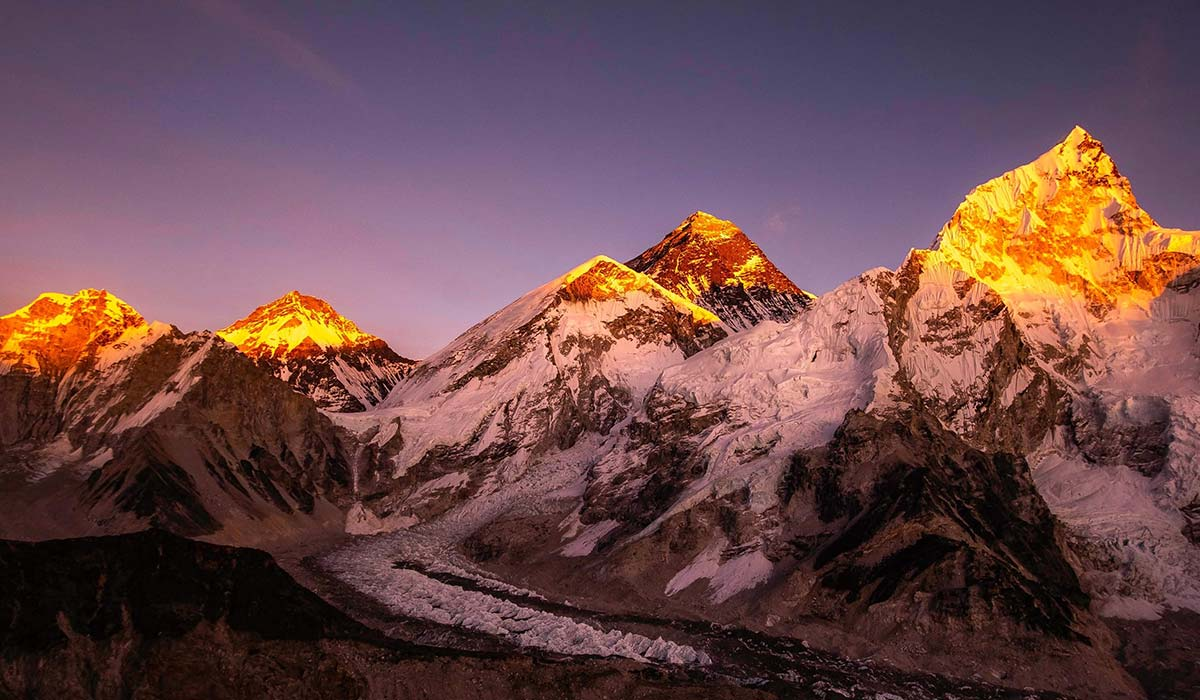
Not every trek in Nepal feels packed with people. If you move away from the main routes, things start to feel different pretty quickly. The trails are quieter, you pass fewer trekkers during the day, and the villages don’t feel as busy. It’s the same mountains, but the experience feels more open and a bit more personal.
You are not rushing to find space in a teahouse or walking in a long line. You just walk, stop when you want, and take things in at your own pace.
Here are five treks where that kind of experience is still easy to find.
Pikey Peak Trek
Pikey Peak lies in the lower Solu region of eastern Nepal, south of the main Everest trail. It usually starts with a drive to Dhap or Phaplu, and from there the trail climbs gradually through pine forests and small Sherpa villages.
One of the main reasons people choose this trek is the viewpoint itself. At around 4,065 meters, Pikey Peak offers a wide panorama that includes Everest, Makalu, Kanchenjunga, and even Dhaulagiri on clear days. Unlike viewpoints on busier routes, you are often sharing the top with only a handful of people.
Culturally, the trail passes through traditional Sherpa settlements where farming and local trade are still the main way of life. You’ll see monasteries, prayer flags along ridgelines, and simple teahouses run by families.
It usually takes around seven days to complete this trek. It is the best option for those who want a shorter trek.
Nar Phu Valley Trek
Nar Phu sits in a restricted part of the Annapurna region, tucked between the Annapurna and Manaslu areas. The trek branches off from the main Annapurna Circuit near Koto and enters a valley that feels noticeably more remote.
The landscape changes as you move along. One moment, you are walking through green hills, and before long, it turns dry and rocky, with narrow gorges and wide, open stretches. Villages like Phu and Nar are small, with stone houses packed close together, built that way to deal with the cold and wind.
The culture here feels closer to Tibet. You’ll see ancient monasteries, mani walls, and prayer wheels throughout the route. Life moves slowly, and tourism hasn’t changed the area as much as in other regions.
A major highlight is crossing Kang La Pass (over 5,000 meters), which connects back towards the Annapurna side. It’s a longer trek, usually around two weeks long, and feels far more isolated than most routes.
Rara Lake Trek
Rara Lake lies in northwestern Nepal, inside Rara National Park. It’s the largest freshwater lake in the country, sitting at around 2,990 meters.
Getting there takes time—usually a combination of flights and drives—but that’s part of why it stays quiet.
The landscape is different from typical Himalayan treks. Instead of high passes, you walk through forests, open hills, and lakeside paths. The water itself changes color throughout the day, depending on the light.
Farming and small-scale trade sustain local communities in the region. Meanwhile, tourism as a profession remains limited here.
The trek to Rara Lake is less about the altitude challenge and more about the setting. It usually takes around a week, depending on the route.
Tamang Heritage Trek
The Tamang Heritage Trek is in the Langtang region of Nepal, near the Tibetan border. People usually begin this hike, which is about seven days, from Syabrubesi.
From there, the trail goes through Gatlang, Tatopani, and Thuman—you just pass through each village as it comes, seeing a bit of how people live along the way.
Life here feels close to tradition, and you can see the influence of Tibetan Buddhism in the houses, monasteries, and everyday routines.
Tatopani is one of the stops people look forward to, mainly for the natural hot springs where you can rest for a while.
The altitude doesn’t go as high as some other treks, but you still get clear views of Langtang Lirung and the surrounding peaks.
It usually takes about a week, and the experience is more about the villages and people you meet along the way than reaching a specific high point.
Manaslu Circuit Trek
One of Nepal’s quieter circuit treks takes you around Mount Manaslu in west-central Nepal. The trek usually begins at Machha Khola. And for the first few days, you follow the Budhi Gandaki River, cross suspension bridges, and move through narrow valleys.
You pass through villages like Jagat, Deng, Namrung, and Samagaun. Lower down, it’s mostly green hills and farmland. As you go higher, you realize that the air feels thinner, the landscape opens up, and the villages start to look different. One can see more Tibetan-style houses and monasteries in this section of the trail.
The hardest part during Manaslu circuit is the day you cross Larkya La Pass, which is at an elevation of 5,106 meters. Because of the pass’s high altitude, cold weather, and long walking distance, most trekkers start before dawn and move slowly.
Because it’s a restricted area, you can’t go on your own—you need permits and a guide. That also means the trail doesn’t get as crowded as some of the other well-known treks.
It usually takes around two weeks to complete this trek. And the journey’s end shows how much the surroundings change from one section to the next.
Why These Routes Feel Different
These treks are not just quieter because fewer people know about them. Some take longer to reach, some need special permits, and some pass through regions where tourism is still limited. That is precisely why they feel more open, slower, and less crowded than Nepal’s busiest trails.
Final Thoughts
These quieter treks aren’t necessarily easier—they just feel different. There’s more space, fewer people, and a slower rhythm to the days.
You notice more along the way, whether it’s the way villages are built into the hills or how the landscape changes as you move higher. For many people, that quieter experience ends up being the part they remember most.
Travel planners at Radiant Treks often recommend these lesser-known routes to trekkers looking for quieter trails and a more immersive mountain experience.