
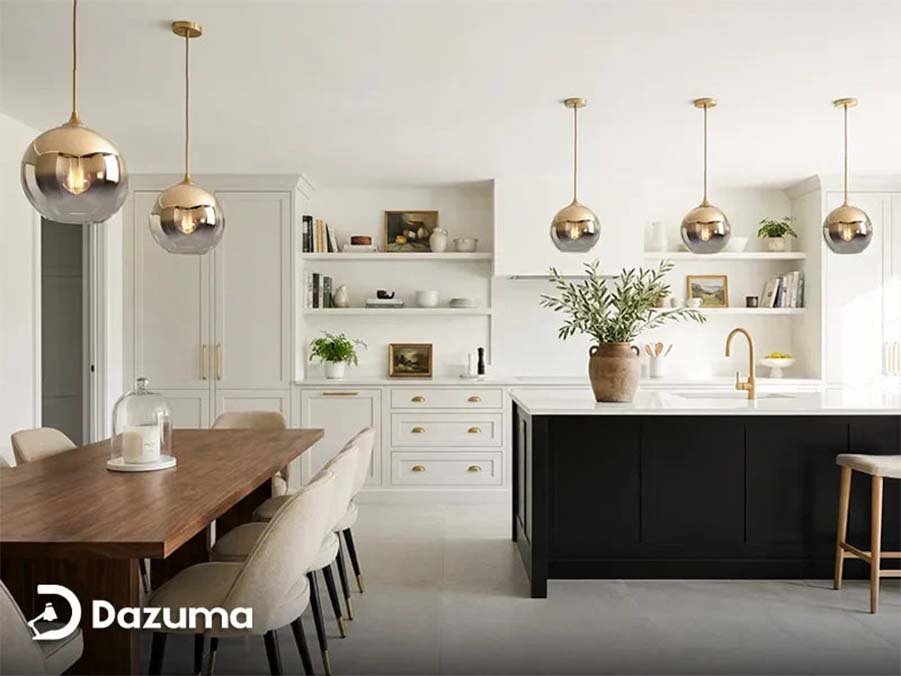
Replacing a ceiling light may seem like a small home update, but the right chandelier can completely change how a room feels. It can make a dining area look more intentional, bring personality to an open-plan living space, or turn an ordinary kitchen island into a striking focal point.
Two chandelier styles have become especially useful in modern interiors: bubble chandeliers and linear chandeliers. One adds softness and sculptural character, while the other creates structure and balance. Understanding the difference can make it much easier to choose a fixture that works with the room rather than simply looking attractive in isolation.
The shape of a chandelier can influence how spacious, balanced, and welcoming a room feels.
Why Chandelier Shape Matters
A chandelier is usually positioned near the visual centre of a room, which means its shape has a strong effect on the entire design. A wide fixture can make a long table feel properly proportioned, while a rounded cluster can soften a room filled with straight architectural lines.
The best chandelier should relate to the furniture below it. It should also suit the ceiling height and the way people move through the room. A beautiful fixture that is too small may disappear, while one that is too large can make the space feel crowded.
Choose a Bubble Chandelier for Softness and Movement
Modern rooms often contain many straight lines, including cabinets, windows, shelves, tables, and door frames. Rounded lighting can help balance those hard edges and make the interior feel less rigid.
A Bubble Chandelier typically combines several globe-shaped shades or glass spheres into one sculptural arrangement. The globes may be grouped tightly, suspended at different heights, or spread across a larger frame.
This style works well in living rooms, stairwells, bedrooms, entryways, and dining areas that need a softer focal point. Clear glass bubbles create an open and airy appearance, while frosted glass produces a gentler glow. Tinted or coloured globes can introduce personality without requiring bold wall colours or major decoration changes.
Bubble chandeliers are particularly effective when viewed from several angles. In an open-plan room or tall entrance, the rounded composition continues to look interesting as people move around the space.
Choose a Linear Chandelier for Balance and Structure
Long dining tables and kitchen islands often look awkward beneath a small central light. The fixture may illuminate only the middle of the surface, leaving the ends visually disconnected.
A Linear Chandelier follows the length of the furniture below it, helping distribute both light and visual weight more evenly. This makes it a practical choice above rectangular dining tables, kitchen islands, breakfast bars, conference tables, and long seating arrangements.
Linear fixtures are available in styles ranging from simple horizontal bars to more decorative designs with glass shades, branching arms, or hanging elements. A slim black frame can give a room a clean architectural look, while brass or gold details add warmth. Glass shades can keep a large fixture from feeling too heavy.
Match the Chandelier to the Room’s Mood
The choice between bubble and linear lighting depends partly on the atmosphere you want to create. A bubble chandelier often feels artistic, playful, and relaxed. A linear fixture generally feels organised, balanced, and more architectural.
For a room filled with rectangular furniture and clean surfaces, a bubble design can provide useful contrast. For a long room that lacks structure, a linear chandelier can help organise the space visually.
The surrounding materials also matter. Glass bubbles pair naturally with mirrors, polished stone, metal details, and contemporary furniture. Linear chandeliers work well with long wooden tables, streamlined cabinetry, and open-plan kitchens.
Get the Hanging Height Right
Even the right chandelier can feel uncomfortable if it hangs at the wrong height. Above a dining table or kitchen island, the fixture should sit low enough to feel connected to the furniture but high enough that it does not block views or interfere with conversation.
In an entryway, living room, or walking area, adequate clearance is essential. Tall ceilings can support a longer suspension, while lower ceilings may require a shallower fixture.
Before installation, consider the chandelier from every major viewing position. A bubble chandelier should look balanced from the sides as well as below. A linear fixture should align with the table or island rather than being centred only according to the room.
Use Layered Lighting for Better Results
A chandelier should not be responsible for every lighting task. It may provide a strong focal point and useful illumination, but most rooms still benefit from additional light sources.
In a kitchen, recessed or under-cabinet lighting can support food preparation. In a dining room, wall lights or lamps can create a softer background glow. In a living area, floor and table lamps can make the room more comfortable during the evening.
Dimming controls can also make a chandelier more flexible. Brighter light may be useful for working or cleaning, while a lower setting can create a more relaxed atmosphere for meals and conversation.
Final Thoughts
Bubble and linear chandeliers can both make a room more memorable, but they create different visual effects. Bubble chandeliers introduce curves, movement, and sculptural softness. Linear chandeliers provide structure, proportion, and balanced illumination across longer surfaces.
The best choice depends on the shape of the furniture, the scale of the room, and the mood you want to achieve. When size, position, finish, and light quality are considered together, either style can transform an ordinary room into a more polished and thoughtfully designed space.
