
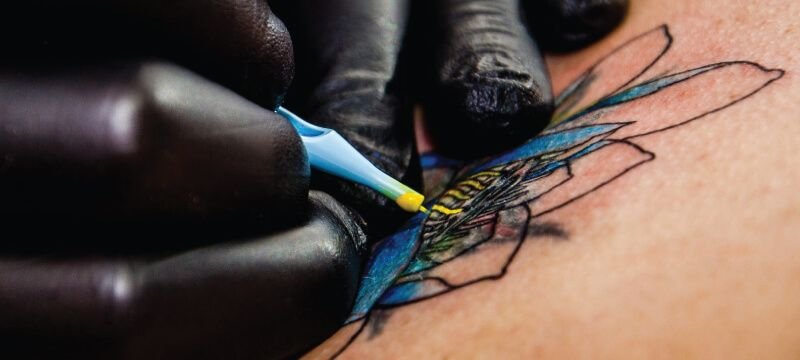
Colored ink tattoos have always been trickier to remove than simple black outlines, and if you’re staring at a faded green vine or a stubborn orange sunset on your skin wondering why it won’t budge, there’s a scientific reason behind it. Different pigments absorb laser light at different wavelengths, which means treating a multicolored tattoo often requires more than one type of laser and considerably more patience. Understanding how this process actually works can save you time, money, and frustration.
Why Colored Ink Behaves Differently Than Black Ink
Black ink absorbs nearly every wavelength of light, which is why it responds so predictably to laser treatment. Colored pigments are pickier. Red, orange, and yellow inks often contain iron oxide or cadmium compounds that only break down under specific wavelengths, while greens and blues frequently resist treatment altogether because they were formulated to be more stable and long-lasting.
This is why a technician needs to identify the pigments in your tattoo before mapping out a treatment plan. A tattoo with five colors might need three or four different laser settings across multiple sessions, whereas a black tattoo of the same size could clear up with a single consistent approach.
The Lasers That Actually Break Down Color
Q-switched lasers have been the standard for years, using short pulses of intense energy to shatter ink particles into fragments small enough for the body’s immune system to clear away. Within this category, Nd:YAG lasers at 1064nm work well on darker pigments like black and dark blue, while the same laser frequency-doubled to 532nm targets red and orange more effectively.
Picosecond lasers have become increasingly common because they deliver energy in even shorter bursts, shattering ink into smaller particles with less heat transfer to surrounding tissue. This matters most for stubborn colors like teal, turquoise, and light green, which older Q-switched technology sometimes couldn’t touch. A clinic offering both Q-switched and picosecond options generally has more flexibility to tailor treatment to your specific ink.
What to Expect During a Removal Session
A typical session starts with the technician testing a small patch of skin to gauge how it responds to the laser and to check for any adverse reaction. The treatment itself for an average-sized tattoo, say 4 by 4 inches, usually takes between 10 and 20 minutes, though larger or multicolored pieces can take longer since the technician may switch between laser wavelengths partway through.
You’ll feel a sensation often compared to a rubber band snapping against the skin, and many clinics apply a cooling device or numbing cream beforehand to make the process more comfortable. Immediately afterward, the treated area typically turns white or slightly raised for a few minutes, followed by redness and mild swelling that can last a day or two.
How Many Sessions Colored Tattoos Actually Need
Black tattoos often fade significantly within six to eight sessions, but colored tattoos frequently require ten to fifteen, sometimes more depending on the pigment density and how deep the ink was originally placed. Sessions are typically spaced six to eight weeks apart to give the immune system time to clear fragmented ink and let the skin recover fully between treatments.
Yellow and white inks are notoriously the slowest to respond, sometimes taking twenty or more sessions, while black and dark blue tend to fade fastest. Setting realistic expectations from the start prevents frustration halfway through treatment when progress seems slower than hoped.
Aftercare That Actually Speeds Up Results
Keeping the treated area clean and moisturized for the first week matters more than most people realize. Avoid picking at any blistering or scabbing that forms, since this can lead to scarring and actually interfere with the pigment clearing process.
Sun exposure should be avoided entirely on treated skin for at least four weeks, and sunscreen with SPF 30 or higher should become a permanent habit on that area even after treatment concludes. Staying hydrated and maintaining a healthy diet also supports the lymphatic system, which plays a direct role in flushing out the broken-down ink particles.
Choosing the Right Clinic for Colored Ink
Not every laser clinic has the equipment or experience needed to handle a full spectrum of tattoo colors. Ask specifically what laser types are available and whether the technician has experience treating the particular colors in your tattoo, since a green or purple design demands a different skill set than a straightforward black tribal piece.
Camberwell’s leading tattoo removal clinic has built a reputation on exactly this kind of specialized, color-specific treatment, offering multiple laser wavelengths under one roof so clients aren’t referred elsewhere partway through their sessions. That kind of continuity makes a measurable difference in how consistently a tattoo fades over time.
The Bottom Line on Colored Tattoo Removal
Removing colored ink takes longer and requires more technical precision than removing black ink, but it’s entirely achievable with the right equipment and a technician who understands pigment chemistry. Before booking a first session, ask detailed questions about laser types, expected session counts for your specific colors, and realistic timelines rather than accepting a generic estimate. That upfront clarity is what separates a smooth removal process from months of unnecessary guesswork.
