
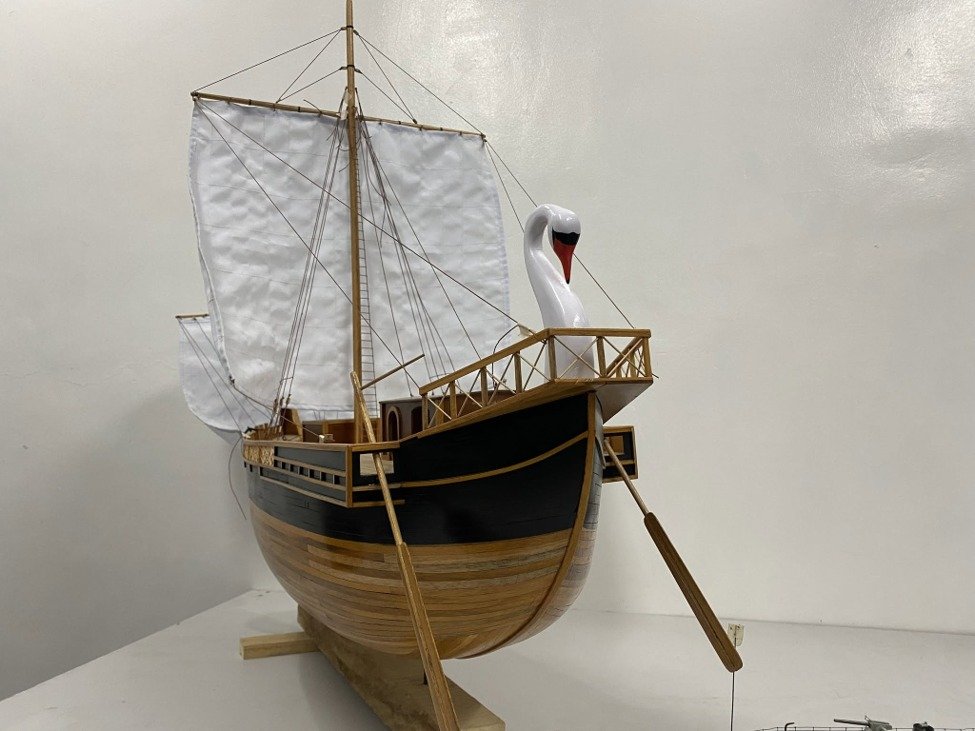
There’s a particular kind of object that shows up in studies, offices, and living rooms without most people stopping to ask why it’s there. A wooden ship, rigged and finished in careful detail, sitting on a shelf or a desk. It looks decorative. It is decorative. But for the person who put it there, it’s usually something more than that — and once you understand the hobby behind it, the appeal becomes obvious.
What Model Boats Actually Are
A model boat, in the serious sense of the term, isn’t a toy. It’s a scaled, detailed replica of a real vessel — built with the same attention to proportion, rigging, and finish that the original ship would have demanded from its own builders. The best examples aren’t mass-produced from a single mould. They’re built individually, often from photographs of a specific vessel, with the kind of craftsmanship that takes real time to get right.
That distinction matters more than most people realise. A generic boat shape painted to look nautical is decoration. A correctly proportioned, historically accurate replica of an actual ship is something closer to a piece of preserved history.
A Craft With Centuries of History
The tradition behind model boats goes back further than most hobbies. Shipbuilders historically constructed scale presentation models before laying the keel of a real vessel — a way of showing owners, investors, and naval committees exactly what they were paying for before construction began. Some of the oldest surviving examples in maritime museums today are these original presentation pieces, centuries old and still remarkably detailed.
What started as a practical tool for shipyards eventually became a craft and hobby in its own right. Sailors built models of the ships they served on. Collectors began commissioning replicas of vessels that mattered to them personally. The practice that started in shipyards has outlasted most of the ships it was originally built to represent.
Why People Get Drawn Into It
The appeal of model boats isn’t really about the finished object — it’s about what the object represents. For many collectors, a specific ship marks a specific period of their life. A vessel they served on, sailed, or simply admired enough to want a permanent physical record of.
There’s also a genuine craftsmanship appeal that has nothing to do with sentiment. Building or commissioning a model boat well requires understanding hull shapes, rigging configurations, period-accurate detail, and finishing techniques that take real skill to execute properly. For people who appreciate that kind of precision, the hobby offers something to genuinely admire.
The USS Constitution — A Case Study in What Makes a Ship Worth Replicating
Few vessels illustrate the appeal better than the USS Constitution — one of the most historically significant ships in American naval history, still afloat today and the oldest commissioned naval vessel in the world still able to sail under its own power. Her record in the War of 1812, where she earned the nickname “Old Ironsides” after British cannonballs reportedly bounced off her hull, makes her exactly the kind of vessel collectors want represented accurately rather than approximately.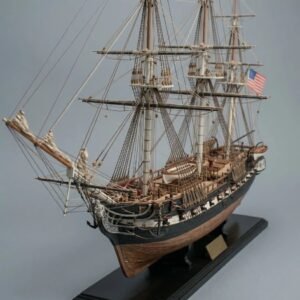
A handcrafted USS Constitution Ship Model captures that level of detail properly — the correct rigging configuration, the gun deck layout, the proportions that made her one of the most formidable frigates of her era. It’s the kind of replica that rewards someone who actually knows the ship’s history, rather than someone who just wants a generic wooden boat on a shelf.
Where the Hobby Is Headed
The model boat hobby is increasingly splitting into two distinct markets. On one side, mass-produced kits aimed at beginners and casual hobbyists. On the other, commissioned handcrafted replicas built to document a specific vessel with real accuracy — built from reference photographs, finished to a standard that holds up under close inspection, and produced as a single piece rather than off an assembly line.
That second category is where the genuine collector interest lives — people who want their connection to a specific ship represented properly, not approximately.
— — —
Commissioned replicas built to this standard are available through Modelworks — handcrafted from reference photographs to a specific brief.