
Introduction
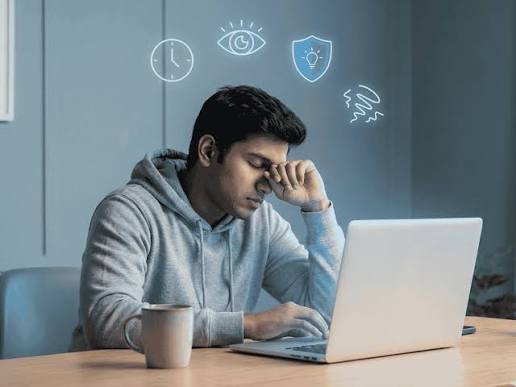
Six o’clock arrives, and so does the headache. A tight band across your forehead, pressure behind your eyes, maybe a dull ache at your temples. You blame it on “a long day” or a stressful meeting. But the timing is the clue you’re missing.
That headache doesn’t appear at random. It builds slowly across the day and peaks almost exactly when your screen hours do. It’s not your workload. It’s not your mood. In most cases, it’s your screen time.
This article looks at why screens cause headaches, how to tell the difference between a stress headache and a screen headache, and what actually helps, starting with something most people overlook: their eyewear.
Why Screens Cause Headaches (Not Just Eye Strain)
Your Eyes Are Working Harder Than You Realise
Screens force your eyes to focus at a fixed, close distance for hours at a time. Small text, glare, and constant refocusing all add up to subtle strain in the muscles around your eyes, a strain you don’t notice until it turns into a headache later in the day.
The Blink Rate Connection
Looking at a screen makes you blink far less than normal, sometimes by half. Fewer blinks means drier eyes, and dry eyes trigger tension in the muscles around them, including your forehead and temples. This is one of the most common, and most missed, causes of a screen headache.
Posture and Neck Strain Feed Into It
Leaning toward a screen, especially a laptop, tightens the muscles in your neck and shoulders. That tension travels upward and shows up as head pain, even though the root cause has nothing to do with your head at all.
The Eyewear That Actually Helps
Before anything else, it’s worth looking at what’s sitting on your face for eight hours a day. The right glasses or lenses can reduce the strain that leads to a screen headache far more effectively than adjusting your screen brightness alone.
Anti-Reflective Coating Matters More Than You Think
Anti-reflective (AR) coating cuts glare from your screen and from overhead lighting. Glare forces your eyes to work harder to see clearly, and that extra effort is a major, often overlooked, contributor to screen headaches. This coating tends to make a bigger difference than blue light filtering on its own.
Blue Light Glasses Can Help, With Limits
Blue light or computer glasses may reduce glare and improve visual comfort for some people. The evidence that blue light itself directly causes headaches is mixed, but many people still find these glasses genuinely more comfortable for long screen sessions, likely due to the glare reduction built into the lens.
Ask About a Screen-Specific Prescription
Standard glasses are made for distance or reading, not for the exact distance most people sit from a monitor. Opticians can prescribe lenses tuned specifically for screen distance, which can make a noticeable difference if you spend most of your day at a desk.
Contact Lens Wearers Need a Different Approach
Screens can worsen the dryness that already comes with wearing lenses, since blinking less means less moisture reaching the lens surface. The good news is that daily disposables, or lenses designed specifically for digital use, can ease this significantly alongside any glasses-based fixes. Browsing contact lenses online makes it easy to compare options built for exactly this, so switching to a pair that’s kinder to screen-heavy days is a quick, worthwhile upgrade.
Eyewear Alone Isn’t the Full Fix
The right glasses or lenses reduce strain, but they work best combined with the habit changes below, not as a replacement for them.
How to Tell It’s Screen-Related, Not Stress
The Timing Pattern
A stress headache tends to appear suddenly, often tied to a specific moment. A screen headache builds gradually and peaks after several hours of screen use, which is why it so often lands around 6pm.
Where It’s Felt
A tight band across the forehead, pressure behind the eyes, or tension at the temples all point toward screens rather than a typical stress headache.
It Eases With Screen Breaks, Not Relaxation Alone
If stepping away from your screen, not just calming down, brings relief, that’s a strong sign your screen is the actual cause.
What Else Actually Fixes It
Adjust Screen Distance and Height
Keep your screen roughly an arm’s length away, with the top of it at or slightly below eye level. This reduces both eye strain and the neck tension that often comes with it.
Fix the Lighting Around You, Not Just the Screen
Reduce glare from windows or overhead lights, and match your screen brightness to the room around you rather than keeping it on the brightest setting.
Build in Real Breaks, Not Just a Glance Away
Follow the 20-20-20 rule properly: every 20 minutes, look at something roughly 20 feet away for a full 20 seconds, not just a quick glance. Add short screen-free breaks every hour, not only at lunch.
Check If It’s Your Prescription
An outdated glasses prescription is one of the most common hidden causes of screen headaches. If your eyewear and habits are both in good shape and the headaches persist, an eye test should be the next step, not another cup of coffee.
When It’s Not Just Screen Time
Signs to Take Seriously
Headaches that don’t ease with breaks, better eyewear, or lifestyle changes are worth paying closer attention to, especially if they come with vision changes, pain on one side only, or headaches unrelated to screen use.
When to See an Optician or GP
If daily headaches continue despite these changes, it’s worth getting a proper check rather than assuming more breaks will eventually solve it.
Frequently Asked Questions (FAQ)
Can screen headaches happen even with good posture?
Yes. Eye strain and a lower blink rate can cause screen headaches on their own, even if your posture and desk setup are otherwise good.
Do blue light glasses actually stop screen headaches?
They can help some people, mainly by reducing glare, but the evidence that blue light itself causes headaches is limited. Anti-reflective coating and the right prescription tend to make a bigger difference.
Conclusion
If your headache shows up like clockwork around 6pm, it’s rarely just stress. It’s far more likely to be hours of screen strain building up quietly through the day. Start with your eyewear: anti-reflective coating, the right prescription, and lenses suited to screen distance can reduce the strain before it ever becomes a headache. Pair that with better screen habits, and most people notice a real difference within a week or two. If it doesn’t ease up, book an eye test and rule out anything more serious.