
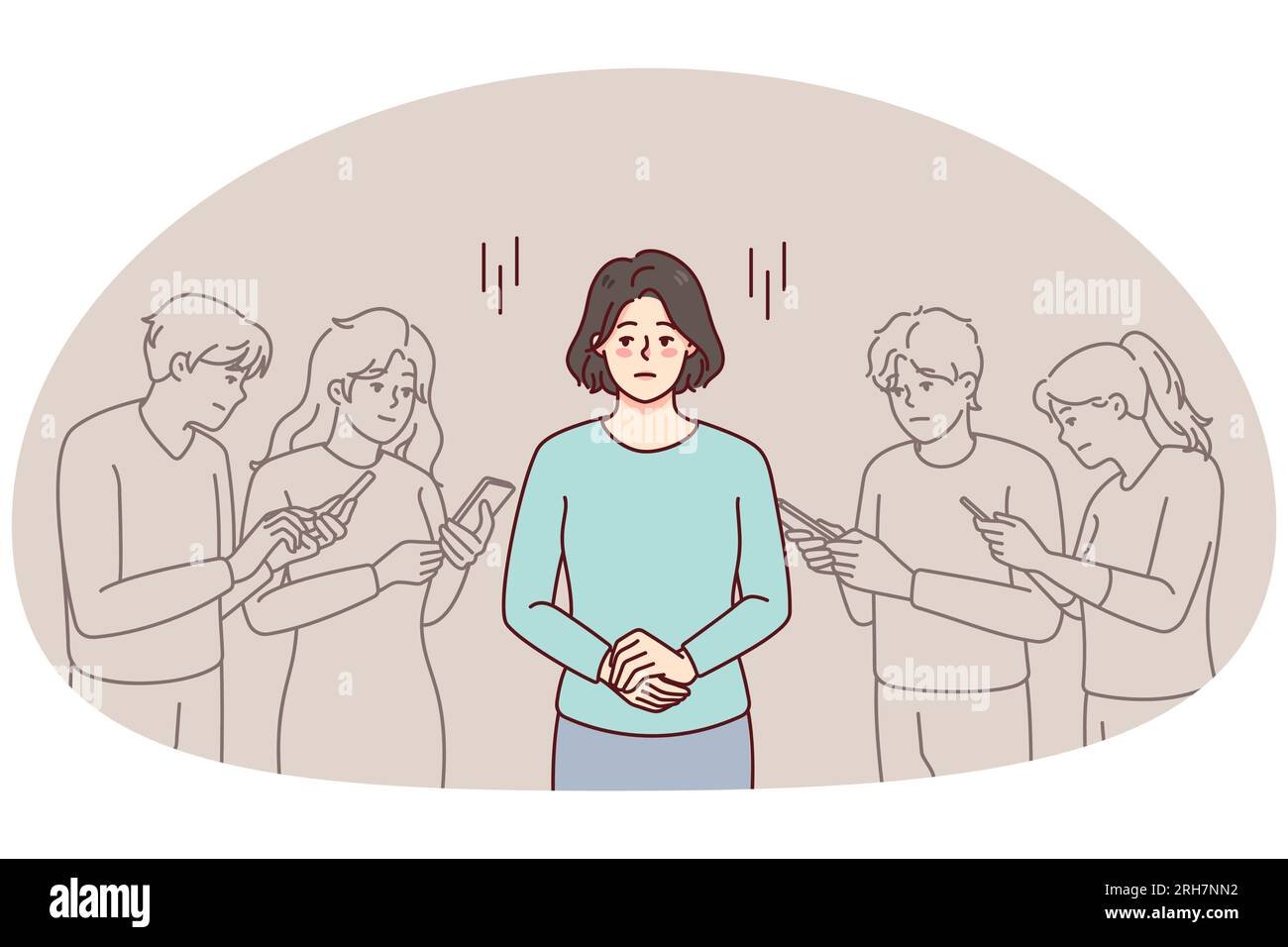
The Busiest Room in the World Is Often the Loneliest
You are standing in the middle of a crowded, sunlit kitchen. Music is playing, someone is laughing by the fridge, and your phone keeps buzzing with texts. By all measurable metrics of modern socialization, you are thoroughly connected. Yet, right there, with a cup in your hand and someone asking about your weekend, a strange coldness settles behind your ribs. You feel completely alone.
It is a strange sensation that feels like a glitch in the human operating system. We are taught that loneliness is something we experience only when we are physically isolated. When it appears in a crowded room, it often brings a heavy dose of shame.
The good news is that it usually is not a sign that something is fundamentally wrong with you. Instead, you may be experiencing what psychologists call felt loneliness, which has little to do with the number of people around you.
Various public health studies suggest that roughly three out of five adults report feeling deeply misunderstood or left out on a regular basis. Millions of people socialize, attend gatherings, and still return home feeling emotionally disconnected. This is not a failure of willpower. Instead, it may reflect a deeper need for structured mental health support to help rebuild meaningful emotional connection.
Why Having a Full Calendar Changes Nothing
Your brain is like an ancient machine running on very modern, cluttered software. Back when our ancestors were dodging predators, being part of a tribe was a matter of literal survival. If you weren’t seen by the group, you were left behind to face environmental hazards.
Your nervous system still carries that exact evolutionary memory. It doesn’t care whether you have hundreds of followers online or a calendar packed with networking events. It wants to know if you are safe, known, and valued by your immediate community.
Filling your schedule with superficial interactions may create the appearance of connection, but it does not always satisfy deeper emotional needs. It is like eating food that fills your stomach without providing much nourishment. You stay busy, but you may still feel emotionally empty.
In many situations, these interactions encourage us to present only certain parts of ourselves. Having access to people via digital messaging platforms or casual acquaintances gives us the illusion of community. But when you look closer, many of these interactions are transactional or highly performative.
You are playing a role, whether it is the productive coworker, the fun friend, or the reliable sibling. If you are only valued for the role you play, your brain may interpret it as a painful conclusion: they love the character, not me. Over time, that disconnect can contribute to the deep ache associated with felt loneliness.
The Clinical Anatomy of Felt Loneliness
Clinicians draw a sharp line between objective social isolation and subjective loneliness. You can live in a cabin in the woods for a month and feel perfectly content, grounded, and fulfilled. That is solitude. Conversely, you can walk through a bustling city square during rush hour and feel like an alien stranded on a hostile planet. That is felt loneliness.
Dr. John Cacioppo, a pioneer in the field of social neuroscience, spent decades studying this phenomenon. His research suggests that loneliness may function as a biological warning system. For some people, feeling disconnected may activate the body’s stress response, contributing to elevated cortisol levels, increased blood pressure, and greater sensitivity to signs of rejection.
The Mechanism of Hyper-Vigilance
Imagine trying to build a close relationship while your brain is constantly scanning for signs of rejection or danger. It can be extremely difficult. You become guarded, you hold back your true thoughts, and you laugh at jokes you don’t find funny just to keep the peace.
Ironically, this hyper-vigilance creates a self-fulfilling prophecy. Because you feel unsafe, you hide your true self, which makes it more likely that people interact only with the version of yourself you present.
Breaking the Vicious Cycle
Breaking this cycle often involves more than simply putting yourself out there. You are already out there in the world, but developing healthier relational habits within a structured outpatient program can provide the necessary guidance. To change the outcome, we must change how we engage with others.
The Three Elements of Genuine Nourishment
So, what actually satisfies the nervous system? What is the emotional equivalent of a home-cooked meal? Many therapists describe meaningful connection as having three important dimensions. If you are missing even one of these, the loneliness can creep back in through the cracks.
Intimate Connection
This comes from the people who know your deepest vulnerabilities, your unique habits, and your internal struggles. This may include a partner, close friend, trusted family member, or participating in individual therapy. It is a space where you may feel comfortable lowering your guard and sharing more openly.
Relational Connection
This is your casual circle of companions. These are the friends you go to the movies with, the coworkers you grab lunch with, and the neighbors you chat with. This circle provides a sense of daily belonging and shared surface-level preferences.
Collective Connection
This is about being part of a larger community or shared purpose. It can help satisfy our natural need for belonging. Examples include a running club, a religious group, a local volunteer organization, or an online community dedicated to a niche hobby.
Understanding Your Personal Deficit
Many people who feel lonely in crowds are actually overflowing with relational connection, but starved of intimate connection. They have people to spend time with, but few they feel comfortable calling during difficult moments.
Simply adding more casual relationships usually does not address a lack of intimate connection. It is like drinking salt water when you are thirsty. It often leaves you feeling even less satisfied.
The True Cost of the Vulnerability Tax
Building genuine connection can feel intimidating because it requires vulnerability. Opening up about a personal struggle creates the possibility of being misunderstood or judged. As a result, many people choose safer, surface-level conversations instead.
The challenge is that meaningful relationships often grow through honesty. When we consistently hide parts of ourselves, we may begin believing that our authentic selves are not acceptable. Crowded rooms and casual conversations rarely address that deeper feeling of disconnection.
Practical Methods for Moving Beyond the Noise
If you are tired of feeling alone in rooms full of people, the solution isn’t to clear your calendar and become a hermit. It is about changing how you connect with others. Here are a few practical, therapist-approved strategies to shift away from superficial noise and toward actual resonance.
Stop Performing and Start Revealing
The next time someone asks how you are doing, resist the urge to give the standard, robotic response. You don’t have to dump your entire life story on a stranger, but try offering a small, honest sliver of reality to a friend.
Try saying something like, “Honestly, I am a bit overwhelmed today, but I am pushing through.” It is a small change, but it can open the door to a more authentic conversation. It signals to the other person that they can drop their guard too. Small moments of honesty can encourage more authentic conversations and help others feel comfortable opening up as well.
Trade Efficiency for Presence
We live in a culture that worships speed and efficiency. We send quick voice notes instead of calling, and we react with an emoji instead of typing a thoughtful reply. We treat our social lives like an email inbox to be cleared. Try slowing down.
When you are having a conversation, put your phone at the bottom of your bag. Don’t just listen to reply; listen to understand the emotion behind the words. Watch their expression, notice their tone, and stay present. Genuine connection often develops through shared attention, careful listening, and genuine presence.
Find Your Shared Context
Sometimes, the easiest way to connect is to take the pressure off the interaction itself. When you are sitting face-to-face trying to make deep conversation, it can feel like an interview. Instead, find activities where you are working side-by-side toward something. Start a garden, take a pottery class, join a community theater group, or volunteer at a local animal shelter.
When your hands are busy and your attention is focused on a shared task, people often become more relaxed and open. For many people, these relaxed conversations become the most memorable and meaningful parts of the experience.
The Quiet Power of Being Seen
Healing from felt loneliness does not necessarily require a complete lifestyle change. For many people, it begins by focusing on the quality of their relationships rather than the number of social interactions they have. One genuine conversation can be more fulfilling than spending hours in a crowded room.
Choosing to be more open with trusted people takes courage, and it often happens gradually. Many people find that this process can lead to a stronger sense of belonging and emotional connection. Taking one small step toward authenticity today may be enough to begin that journey.