
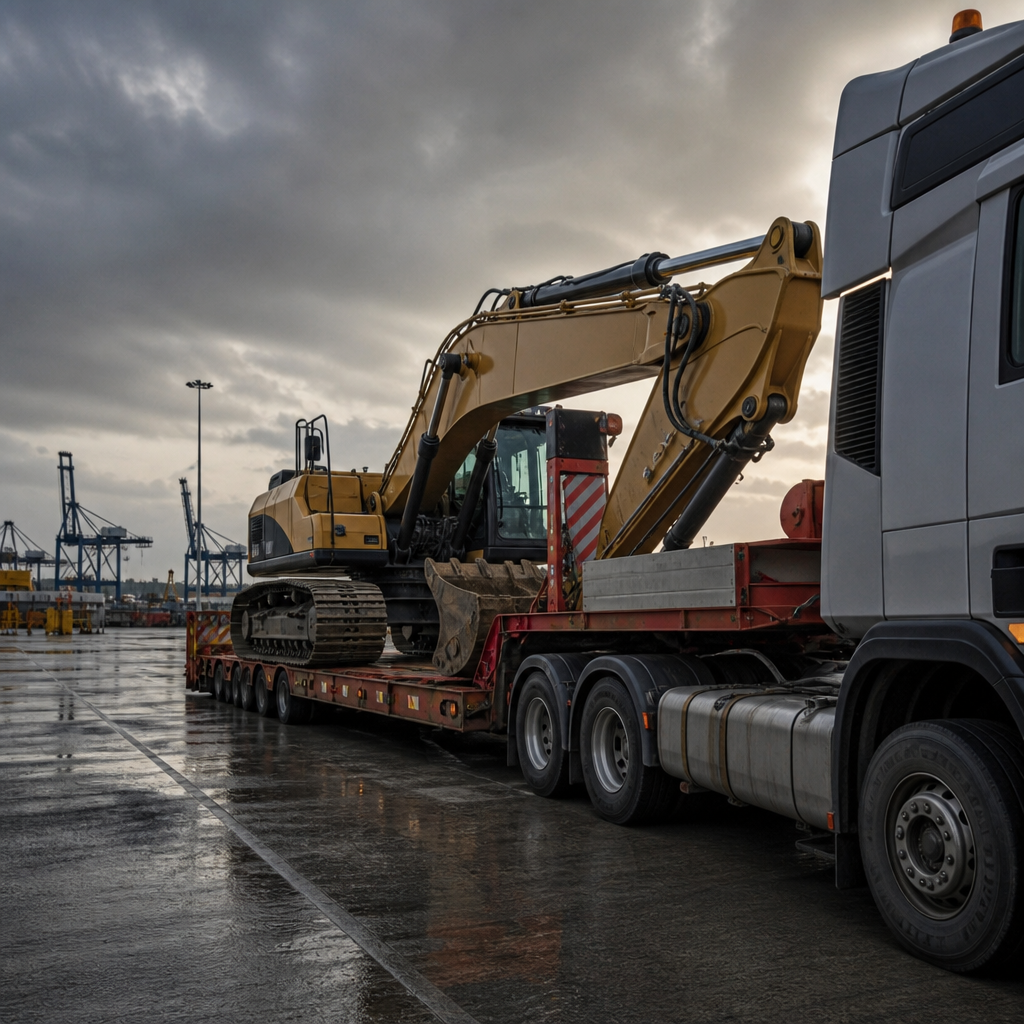
The movement of heavy machinery and oversized loads has never been a simple undertaking, but in today’s increasingly volatile logistics environment, the stakes are higher than ever. From construction sites in Central Massachusetts to industrial facilities across New England, the demand for reliable, specialized transport services continues to grow. Understanding what drives this complexity — and how to work with the right partners — is essential for any business that depends on moving large equipment efficiently and safely.
Why Heavy Equipment Transport Requires Specialized Expertise
Unlike standard freight, heavy equipment transport involves a unique convergence of regulatory compliance, route planning, load engineering, and real-time coordination. Oversized loads often require special permits from state and local authorities, escort vehicles, and careful assessment of road conditions, bridge weight limits, and overhead clearances. A single miscalculation can result in costly delays, infrastructure damage, or serious safety incidents.
Massachusetts, with its dense urban corridors, aging infrastructure, and strict permitting requirements, presents particular challenges for heavy haul operators. Routes through Worcester County must account for a mix of highway access, local road restrictions, and seasonal weight limits that change with frost laws in the spring. Operators who lack local knowledge often find themselves navigating bureaucratic hurdles that add days — sometimes weeks — to project timelines.
The Role of Local Knowledge in Route Optimization
Experienced heavy transport providers understand that route optimization is not simply about finding the shortest path. It involves identifying roads with adequate load-bearing capacity, avoiding low-clearance bridges, coordinating with utility companies for potential wire lifts, and timing movements to minimize traffic disruption. In Worcester specifically, the combination of historic road layouts and modern commercial development creates a routing environment that rewards deep local familiarity over generic GPS-based planning.
Seasonal considerations also play a major role. Massachusetts enforces frost law restrictions typically between late February and mid-April, during which weight limits on certain roads are significantly reduced. Businesses planning equipment moves during this period must work with carriers who understand how to adapt schedules and routes accordingly, or risk permit violations and project delays.
Supply Chain Disruption and Its Impact on Equipment Logistics
The broader logistics industry is grappling with a reality that industry leaders have been warning about for years: supply chain disruption is no longer an exception — it is the new normal. As experts in global freight and resilience continue to emphasize, businesses must build adaptive strategies into their logistics planning rather than treating disruption as a temporary inconvenience to be managed reactively.
For heavy equipment transport, this means that delays in machinery delivery can cascade into project shutdowns, missed construction deadlines, and significant financial penalties. A crane that arrives two weeks late to a job site doesn’t just represent a transport failure — it can halt an entire construction schedule, delay subcontractors, and erode client relationships. The pressure on transport providers to deliver with precision and reliability has never been greater.
Building Resilience Into Your Equipment Transport Strategy
Resilience in heavy equipment logistics starts with choosing partners who invest in contingency planning. This includes maintaining relationships with multiple permit agencies, having access to diverse equipment fleets, and employing dispatchers who can pivot quickly when road conditions, weather events, or regulatory changes alter the original plan. Businesses that treat transport as a commodity — always choosing the lowest bidder — often discover that the savings evaporate the moment something goes wrong.
Proactive communication is another pillar of resilient logistics. The best transport providers don’t wait for clients to ask for updates — they provide real-time tracking, advance notice of potential delays, and clear documentation at every stage of the move. This transparency allows project managers to adjust their own timelines and resource allocations before a small delay becomes a major crisis.
Understanding the Cost Drivers Behind Heavy Haul Transport
Many clients are surprised by the complexity of pricing in heavy equipment transport. Unlike standard parcel or LTL freight, heavy haul rates are influenced by a wide range of variables that go beyond simple distance and weight calculations. Permit fees, escort vehicle requirements, specialized trailer configurations, fuel surcharges, and insurance costs all contribute to the final price. Understanding these factors helps businesses budget more accurately and evaluate quotes more intelligently.
The same principles that govern what determines the cost of sending cargo internationally apply in many ways to domestic heavy haul: distance, weight, dimensions, route complexity, and timing all interact to shape the final figure. Clients who provide detailed load specifications upfront — including dimensions, weight, center of gravity, and delivery site conditions — enable carriers to provide more accurate quotes and avoid costly surprises during execution.
Why Transparency in Quoting Matters
A reputable heavy transport provider will walk clients through the components of their quote rather than presenting a single opaque number. This transparency not only builds trust but also allows clients to identify areas where they can reduce costs — for example, by scheduling moves during off-peak permit windows or consolidating multiple equipment moves into a single permitted trip. The relationship between client and carrier works best when both parties share information openly and plan collaboratively.
Bear Down Logistics: A Trusted Partner for Worcester-Area Equipment Moves
For businesses operating in Central Massachusetts, finding a carrier with the right combination of local expertise, regulatory knowledge, and operational reliability is critical. Bear Down Logistics has established a strong reputation in the region for handling complex, high-stakes equipment moves with professionalism and precision. Their team brings deep familiarity with Massachusetts permitting requirements, seasonal road restrictions, and the specific routing challenges that define the Worcester area.
Whether the project involves moving construction equipment to a new job site, relocating industrial machinery between facilities, or transporting agricultural or utility equipment across the state, Bear Down Logistics approaches each move with the same commitment to safety, compliance, and on-time delivery. Their investment in proper equipment, trained operators, and proactive client communication sets them apart in a market where reliability is everything.
Choosing the Right Provider for Your Next Equipment Move
When evaluating heavy transport providers, businesses should look beyond price alone. Licensing and insurance credentials, permit experience, fleet condition, and client references all matter. Ask potential carriers how they handle unexpected route changes, what their communication protocols are during a move, and how they manage permit delays. The answers will reveal a great deal about their operational maturity and commitment to client outcomes.
For companies in the Worcester region, working with a provider that specializes in heavy equipment transport in Worcester means gaining access to a team that understands the local landscape — literally and logistically. That local expertise translates directly into smoother moves, fewer surprises, and greater confidence that your equipment will arrive on time and in the condition it left.
Conclusion
Heavy equipment transport in Massachusetts demands more than a truck and a driver. It requires expertise, planning, regulatory fluency, and a genuine commitment to client success. As supply chain disruptions continue to reshape the logistics landscape, the value of working with experienced, reliable transport partners has never been clearer. For businesses in Worcester and across Central Massachusetts, investing in the right carrier is not just a logistical decision — it is a strategic one that directly impacts project outcomes, timelines, and bottom-line performance.