
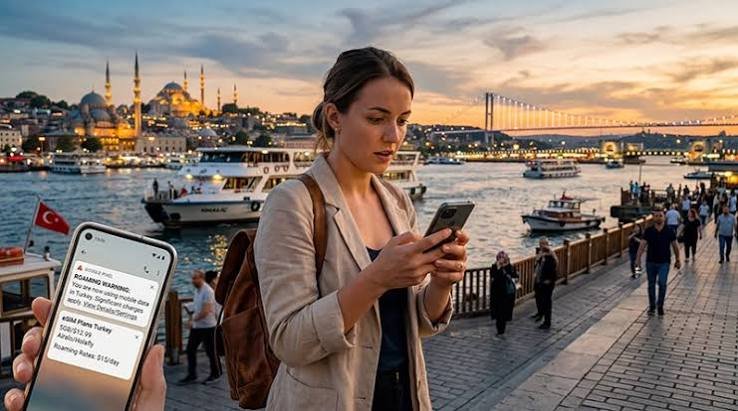
Flights booked. Hotel confirmed. Passport checked. Airport transfer arranged.
For many people travelling to Turkey, there is now another item quietly joining that pre-departure checklist: mobile data.
It may not sound as important as accommodation or travel insurance, but the way people use their phones abroad has changed considerably. Navigation, hotel communication, boarding passes, restaurant searches, translation, transport information and last-minute bookings increasingly depend on having an internet connection.
That is making travellers think about connectivity before they arrive, rather than waiting until they are standing inside an airport looking for Wi-Fi or a local SIM card.
Turkey Is a Very Mobile Kind of Trip
A holiday in Turkey can involve much more movement than travellers initially expect.
Someone visiting Istanbul might use their phone several times before lunchtime: checking the metro route from the airport, finding their hotel, navigating between Sultanahmet and Galata, checking ferry times or searching for somewhere to eat in Kadıköy.
The same becomes true outside Istanbul.
Visitors to Cappadocia may need to communicate with tour companies about early-morning pickups. Travellers staying around Antalya, Bodrum or Fethiye often move between resorts, beaches and surrounding towns. Others build longer itineraries that combine several regions of Turkey in one trip.
In each case, internet access becomes part of the practical side of travelling.
Hotel Wi-Fi still has its place, but it cannot help much when you are trying to find the right street, confirm a pickup point or work out which bus to take.
Roaming Is No Longer the Only Easy Option
For years, the simplest choice was to use international roaming from a home mobile operator.
The advantage is obvious: there is almost nothing to set up.
The disadvantage is that roaming costs and allowances vary significantly between providers, particularly when travelling outside the destinations included in a domestic mobile plan.
Another familiar option is buying a local Turkish SIM card after arrival. That can make sense for some visitors, especially those staying for longer periods, but it also means dealing with mobile connectivity once the trip has already started.
The growth of eSIM technology has created another way to approach the problem.
Instead of inserting a physical SIM card, users of compatible smartphones can download a digital mobile profile directly onto their device.
That makes it possible to arrange data before departure.
The Airport Experience Is Part of the Appeal
Airports are rarely where travellers want to spend extra time.
After a flight, immigration, baggage collection and finding transport, buying and configuring mobile service can feel like one more unnecessary task.
With an eSIM, much of that preparation can happen earlier.
A traveller looking for an eSIM Turkey plan, for example, can use MobiSIM to select a Turkey data package online. The company currently provides a range of plans with different data allowances and validity periods, with setup handled digitally rather than through a physical SIM card.
For compatible devices, the eSIM information can be received electronically and installed before or around the time of travel.
The result is a simple but useful difference: mobile connectivity can be treated like another part of trip preparation instead of an arrival-day problem.
Travel Data Is Not Just About Social Media
When people hear “mobile data abroad”, it is easy to think mainly about Instagram, TikTok or uploading holiday photographs.
In reality, some of the most useful travel applications consume relatively modest amounts of data.
Maps are an obvious example.
So are messaging apps, email, restaurant searches, online tickets, ride services, weather forecasts and translation tools.
Being connected can also help when plans change unexpectedly.
A hotel may send new check-in instructions. A transfer driver may need to contact you. A restaurant may change its opening hours. A transport route may be different from what you expected.
None of these situations requires constant phone use, but they are much easier to deal with when internet access is already available.
How Much Data Do Travellers Actually Need?
There is no perfect amount because two people taking exactly the same trip can use completely different quantities of data.
A traveller who mostly uses Maps, WhatsApp and occasional web searches could comfortably use much less than someone posting videos, making frequent video calls or working remotely.
Length of stay matters, but behaviour matters just as much.
Streaming and video are usually where usage increases quickly. Downloading content over hotel Wi-Fi before leaving for the day can therefore help travellers make a smaller data package last longer.
It is also worth downloading offline maps for places where coverage may be less consistent, particularly when travelling beyond major cities and tourist centres.
Thinking about data in advance can prevent both extremes: purchasing far more than necessary or running out halfway through the trip.
Keeping Your Regular SIM Can Make Things Easier
Another practical benefit of modern smartphones is that many can use an eSIM alongside another SIM.
This means travellers may be able to keep their normal number active while assigning mobile data to the travel eSIM.
For someone who needs to continue receiving messages or calls on their regular number, this can be more convenient than physically removing their home SIM card.
The exact setup varies by phone, so device compatibility should always be checked before purchasing.
Travellers should also review their mobile data and roaming settings carefully. Having two active SIMs makes it important to know which one the phone is using for internet access.
Connectivity Is Becoming Part of Better Travel Planning
What is interesting about eSIM technology is that it does not really change the destination.
Turkey is still Turkey.
The Bosphorus looks the same. Cappadocia’s landscapes are no less impressive. The beaches around the Aegean and Mediterranean do not become better because a phone has mobile data.
What changes is the friction around the journey.
Travellers can find things faster, communicate more easily and solve small problems without searching for public Wi-Fi.
This is why choosing a Turkey eSIM through services such as MobiSIM is increasingly relevant to the way modern trips are organised. MobiSIM currently offers Turkey-specific and broader regional eSIM options, giving travellers the ability to choose based on the length and route of their journey.
For someone spending the entire holiday in Turkey, a country-specific plan may make the most sense. For travellers moving between Turkey and other destinations, comparing regional coverage before buying can be useful.
The Small Details Often Make the Biggest Difference
Most people remember the major parts of travel planning.
They remember to book the flight.
They remember the hotel.
They remember the passport.
It is often the smaller logistical details that only become noticeable once something goes wrong.
Mobile connectivity is one of them.
Organising internet access before flying to Turkey may only take a few minutes, but it can remove one problem from the first hours of the trip.
And when the goal is to spend more time experiencing a destination and less time solving avoidable travel problems, that is a small preparation that can make a surprisingly meaningful difference.