
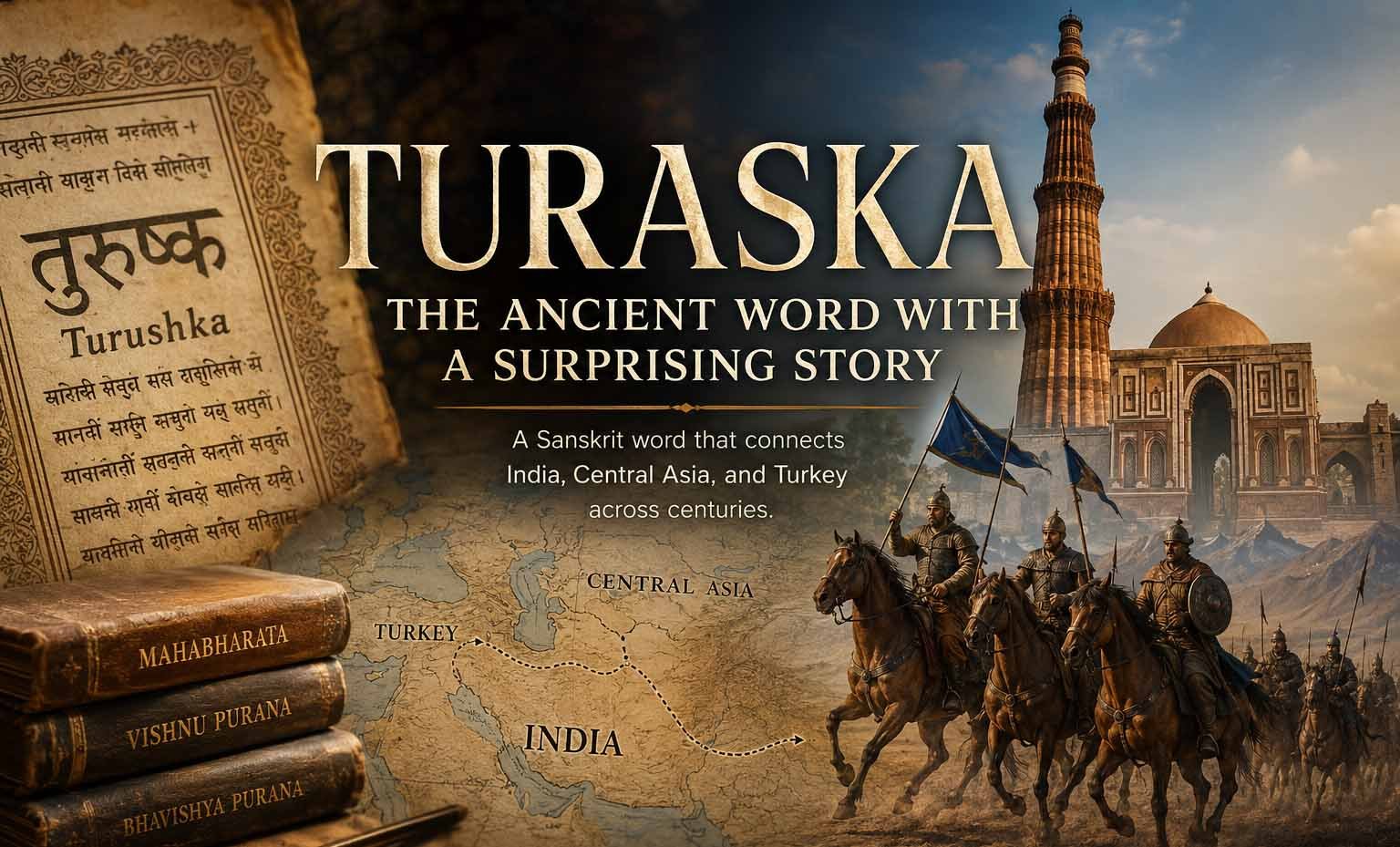
Have you ever heard an old word and wondered what story it hides? Some words are much more than simple names. They carry history, culture, and memories from long ago. One such word is Turaska. At first, it may seem like just another old term from the past. But when we look closer, we find a story that connects different lands, different people, and many years of history.
The story of Turaska takes us back to ancient India. It appears in old Sanskrit writings that were written many centuries ago. These writings help us learn how people understood the world around them. They also show that people in ancient India knew about lands and communities beyond their own borders.
What makes Turaska so interesting is that its meaning changed over time. It started as a word used for groups living outside India’s northwestern areas. Later, it became connected to Turkic people and rulers who played an important role in South Asian history. This change gives us a better understanding of how language grows along with history.
In this article, we will explore where Turaska came from, how it was used in old texts, what it meant to ancient writers, and why it still matters today. By the end, you will see that this small word has a much bigger story than many people realize.
What Is Turaska?
Turaska is an ancient Sanskrit word that appears in several old Indian writings. In simple terms, it was often used to describe people who lived beyond the northwestern borders of India. These groups were seen as different from the communities that followed the traditional way of life in ancient India.
Over time, the meaning of Turaska became more specific. Instead of being a general name for outsiders, it started to refer more closely to Turkic and Central Asian groups. These communities traveled, traded, and sometimes ruled parts of the Indian subcontinent. Because of this, the word became linked to real historical events and people.
When historians study Turaska today, they are not only studying a word. They are also studying the people connected to that word. It helps experts understand how different cultures met and influenced one another over many centuries.
Think of Turaska as a small window into the past. Looking through that window allows us to see trade routes, moving armies, cultural exchange, and the many ways people from different regions interacted with each other.
Where the Word Turaska Came From
The word Turaska comes from ancient Sanskrit. In old writings, it is sometimes written as Turaṣka or Turushka. These different forms show that the word has been used for a very long time and appeared in different texts and traditions.
Some researchers believe the word may be linked to the Sanskrit root “tura,” which is often connected with speed or quick movement. According to this idea, the name may have been used for groups known for traveling quickly, especially horse-riding communities from Central Asia.
It is important to remember that the exact origin of very old words is not always fully certain. Language changes over time, and scholars sometimes have different views. Even so, most agree that Turaska became closely connected with people from the northwest and regions beyond India.
What makes the word special is not only where it came from but also how long it survived. Many old words disappear completely. Turaska continued to be used for centuries and remained part of historical discussions long after it first appeared.
Turaska in Old Indian Texts
One reason Turaska is important is that it appears in some of the most famous ancient Indian writings. These texts include the Mahabharata, the Vishnu Purana, and the Bhavishya Purana. These works are valuable sources for understanding how people viewed the world in earlier times.
In these writings, Turaska was often used when discussing people who lived outside the main areas of ancient India. The word helped writers describe groups that were different in language, customs, or place of origin. This shows that ancient authors were aware of many communities beyond their own regions.
The use of Turaska in several major texts also tells us that it was not a rare word. It was known well enough to appear in different types of literature. This suggests that the people being described had become familiar to the writers and readers of that time.
These references are important for modern historians. They provide clues about trade, travel, migration, and contact between India and neighboring regions. Even a single word in an old text can help experts learn more about the past.
How Ancient India Saw Turaska
In ancient times, many societies used special names for people who came from different places. Turaska was one of those names. It worked as a way to identify groups that lived beyond the traditional borders of Indian society.
At first, the word was not focused on one specific group. Instead, it was often used as a broad label for people from the northwest. These communities may have had different customs, languages, and ways of life. Because of this, they were viewed as outsiders by many writers of the time.
Some ancient texts place Turaska among groups connected to periods of social change. For example, references in the Vishnu Purana link such groups with the Kali Yuga, a period often described as a time of change and disorder. This shows how ancient writers sometimes viewed foreign groups through the ideas and beliefs of their own society.
Today, historians look at these references carefully. Rather than judging the people being described, researchers use these texts to understand how ancient communities viewed those who lived beyond their borders. This helps create a clearer picture of life in the ancient world.
Turaska and Central Asia
The story of Turaska becomes even more interesting when we look at Central Asia. For many centuries, Central Asia was a busy region where people, goods, ideas, and cultures moved from place to place. It connected different parts of Asia through travel and trade.
Many of the groups linked with the name Turaska came from or passed through Central Asia. These people were often skilled horse riders and travelers. They moved across large areas and helped connect distant regions through trade networks and cultural contact.
Ancient India did not exist in complete isolation. Merchants, travelers, and leaders regularly interacted with people from neighboring lands. Through these meetings, ideas and traditions spread from one place to another. Turaska became one of the words used to describe some of these outside groups.
The connection between Turaska and Central Asia helps us understand that history is rarely limited by borders. People have always traveled, shared knowledge, and influenced one another. The story of Turaska is one example of these long-lasting connections.
How Turaska Changed Over Time
Like many old words, Turaska did not keep the same meaning forever. As new groups arrived and history moved forward, the word slowly changed. This is something that happens with many languages around the world.
In its early use, Turaska was mainly a broad term for people living beyond India’s northwestern areas. It was a general label rather than the name of one exact community. Writers used it to describe groups they saw as different from the local population.
As centuries passed, the word became more closely linked with Turkic peoples. Historical events, migration, trade, and political change all played a role in this shift. The word slowly moved from a general description to a more specific one.
This change shows how language follows history. When societies change, words often change too. Understanding that process helps us understand not only the meaning of Turaska but also the changing world in which the word was used.
Turaska in the Medieval Period
As time moved forward, Turaska became more closely linked with Turkic rulers and warriors. This happened because many Central Asian groups started entering the Indian subcontinent through travel, trade, and military campaigns. So the word became more than just an old name in Sanskrit texts.
One famous ruler often connected with this wider history is Mahmud of Ghazni. He came from the Ghaznavid world, which had strong Turkic links. His campaigns into India made a deep mark on history, and later Indian sources used words like Turaska for such outside powers.
The Delhi Sultanate is another important part of this story. Many early rulers of the Delhi Sultanate had Central Asian or Turkic roots. Their rule changed the politics, language, buildings, and court life of North India in many ways.
This is why Turaska is not only a word from books. It is also tied to real events. It helps us see how people from Central Asia became part of the story of India. Their arrival changed both sides, because contact always brings some form of change.
Turaska and Cultural Exchange
The story of Turaska is also a story of culture. When people move from one place to another, they do not bring only weapons or trade goods. They also bring food, clothes, words, music, art, and new ways of thinking.
The groups linked with Turaska helped connect India with Central Asia. Over time, these links shaped many parts of life. New styles of building, new court customs, and new language forms slowly became part of the larger South Asian world.
You can think of it like a meeting of roads. One road came from India. Another road came from Central Asia. When these roads met, people shared ideas. Some ideas changed. Some stayed. Some became part of daily life.
This is why historians study Turaska with care. The word gives them a clue about old contact between people. It shows that culture is not fixed in one place. It moves, grows, and changes when people meet.
Turaska in Modern Use
Today, Turaska is still useful in history and language study. Scholars use it when they talk about ancient Sanskrit texts, old Indian views of foreign groups, Turkic peoples, and Central Asian links with South Asia.
In this modern sense, Turaska helps readers understand how old writers named people from outside their own world. It also helps explain how India was connected with faraway regions long before modern maps and borders existed.
One very interesting modern point is its use in Bengali. In Bengali, Turaska is used as a word for Turkey. This makes the word even more special because it did not fully disappear after ancient times.
So, when someone studies Turaska today, they are not only looking at the past. They are also seeing how one old word can live on in a modern language. That makes its journey even more surprising.
Why Turaska Still Matters
Turaska still matters because it teaches us how words can carry history. A single word can tell us about travel, trade, war, culture, and how people saw each other in old times.
It also helps us understand that India and Central Asia were not separate worlds. They were linked by roads, rulers, traders, travelers, and ideas. These links shaped history in ways that are still seen today.
The word Turaska also reminds us to read old texts carefully. Ancient writers used words based on what they knew, feared, respected, or noticed. Their words tell us a lot about their world.
In 2026, this topic still feels useful because people are more interested in roots, identity, culture, and language. Turaska gives readers a simple way to understand a big story from the past.
Common Misunderstandings About Turaska
One common mistake is thinking Turaska always meant only one exact group. In early use, it was often a broad word for people from the northwest. Later, it became more linked with Turkic and Central Asian groups.
Another mistake is thinking Turaska is only about war. It is true that some sources connect the word with rulers, armies, and campaigns. But the story is also about culture, trade, language, and contact between people.
Some readers may also think Turaska means the same thing in every time period. That is not correct. The meaning changed as history changed. This is why the word must be understood in the time and text where it appears.
It is also important to know that old words can have many layers. Turaska can be a Sanskrit term, a historical label, a sign of India-Central Asia contact, and a modern Bengali word for Turkey. All these meanings are part of its story.
Final Thoughts
Turaska is a small word with a long and rich story. It began as an old Sanskrit term and became linked with foreign groups, Central Asia, Turkic peoples, and later historical rulers.
Its meaning changed with time. First, it was a broad name for outsiders from the northwest. Later, it became more closely tied to Turkic groups and the political changes of medieval India.
The best thing about Turaska is that it shows how language keeps history alive. Words can travel across time, just like people travel across lands. They can change, grow, and still carry old memories.
In the end, Turaska is more than an ancient word. It is a key to understanding how India, Central Asia, and Turkey are connected through language, culture, and history.
(FAQs)
What does Turaska mean?
Turaska is an old Sanskrit word. It was used for foreign groups, especially people linked with Central Asia and Turkic roots. In simple words, it was a name used for people from outside India’s northwestern area.
Where does the word Turaska come from?
The word comes from Sanskrit. It also appears in forms like Turaṣka and Turushka. Some people connect it with the idea of speed or fast movement, but the exact root should be understood carefully.
Is Turaska mentioned in old Indian texts?
Yes, Turaska is linked with old Indian texts such as the Mahabharata, the Vishnu Purana, and the Bhavishya Purana. These texts used the word for groups living beyond India’s northwest borders.
Is Turaska related to Turkey?
Yes, there is a link in a broad historical and language sense. Turaska was connected with Turkic people in old history. In modern Bengali, Turaska is also used as the word for Turkey.
Was Turaska a person?
No, Turaska was not one person. It was a word used for groups of people. These groups were often seen as foreign or connected with Central Asia and Turkic communities.
Why is Turaska important?
Turaska is important because it connects language with history. It helps us understand how ancient India saw foreign groups and how India and Central Asia were linked through people, travel, rule, and culture.
Does Turaska have social media, net worth, or relationships?
No. Turaska is not a modern person, brand, or celebrity. It is an old historical word. So it does not have social media, net worth, age, or personal relationships.
Read Next:
Pentikioyr Explained: What It Means and Why It Matters for Healthy Feet
