
The term “cold calling center” covers a wide range of operations. A shared offshore call center processing 500 dials per agent per day and a US-based B2B outbound agency with dedicated reps and a documented qualification process are both called cold calling centers. They produce very different results.
Knowing which model you are evaluating before you request a quote is the most important step in the selection process.
This article explains what cold calling centres actually are, what separates the serious ones from volume-dialling operations. And which companies are worth putting on a shortlist in 2026?
What Is a Cold Calling Center?
A cold calling center is a business that employs trained callers to conduct outbound phone outreach on behalf of client companies. The center manages caller recruitment, training, dialing infrastructure, compliance and reporting. Clients receive qualified leads or booked appointments without building or managing the internal calling function.
Cold Calling Center vs Cold Calling Agency: What’s the Difference?
A cold calling centre mainly handles call volume. They make calls, follow scripts, and complete outreach tasks.
A cold calling agency is more focused on sales results. They help with targeting, messaging, lead qualification, follow-up, and booking better meetings for your sales team. The main difference between them is:
| Cold Calling Center | Cold Calling Agency |
| High call volume | Qualified sales opportunities |
| Usually limited | Builds outreach strategy |
| Follows fixed scripts | Customizes scripts by market |
| Works from provided lists | Helps define and refine ICP |
| Basic qualification | Deeper lead qualification |
| Tracks calls and talk time | Tracks meetings, lead quality, and pipeline |
| Simple calling tasks | B2B lead generation and appointment setting |
| Acts like an outsourced calling team | Acts more like a sales growth partner |
US-Based vs Offshore Cold Calling Centers
Location matters in cold calling because it affects more than an accent. It can change connection rates, conversation quality, and how well callers handle objections during a live sales conversation.
US-based callers are often stronger when the target market is in North America for B2B. The conversation feels more familiar, and the caller can usually handle industry questions, unexpected objections, and tone better.
That’s why US-based cold calling centers are usually a good fit when:
- You sell to North American B2B buyers.
- The first call needs strong objection handling.
- Your offer needs some industry knowledge.
- Call quality matters more than call volume.
- You want the best chance of keeping prospects engaged.
But, yes, Offshore cold calling centers are usually more affordable.
Teams in places like the Philippines or India can work well for simple outreach where the script is clear, and the call does not require deep sales judgment.
Offshore teams can be a good fit for:
- Basic appointment reminders.
- Simple consumer outreach.
- High-volume calling.
- Follow-up calls with clear instructions.
- Campaigns where cost control matters most.
Some agencies also use a hybrid model. Offshore callers handle the first layer of prospecting, while US-based callers handle qualification and higher-value conversations. This can lower the cost while keeping the most important calls with stronger reps.
Best Cold Calling Centers in 2026
The companies below represent the strongest options across the full range of models, price points and service types. Each entry leads with who the program is built for.
1. CallingAgency
CallingAgency operates as a dedicated cold calling center, not a shared-agent pool. Every client account gets callers focused solely on that account. The campaign runs on the C.A.L.L.S.™ Framework, a five-step methodology built from over 2,100 B2B campaigns across eight years of outbound operations.
The way we look at cold calling results is pretty simple. Most of the success happens before the caller ever picks up the phone, like-
About 40% of the result comes from Calibrate. Another 25% comes from Arrange. This is the scripting stage, but not in a robotic way. We usually build 3 to 5 script versions for different buyer types, then test what actually gets better conversations.
Then comes Launch, which is about 15% of the result. This is where calls, timing, local caller ID, and follow-up channels start working together. When done right, connection rates can reach 2x the industry average.
Another 15% comes from Land. This is where lead quality is checked. The prospect must meet the ICP, demonstrate a real need, have the right authority or influence, and agree to the next step. We only pass leads that score 7 or higher after review.
The final 5% is Schedule. This is where the qualified meeting is added to the calendar, with notes, prospect context, and buying signals. So the sales team is not walking into the call blind.
That’s why our output of this process is an average appointment show rate of 68%.
Industries served: Staffing, logistics, SaaS, manufacturing, financial services and professional services
Caller model: Dedicated callers per account; C.A.L.L.S.™ Framework; 3-Layer Qualification Engine on every lead
Pricing: Contact for a custom package
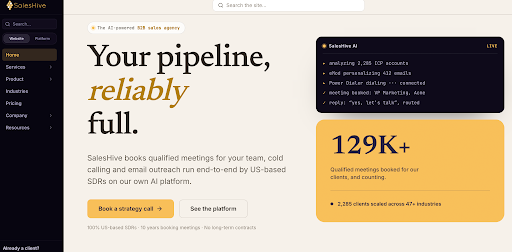
2. SalesHive
SalesHive runs a fully managed outbound center built around its own proprietary Power Dialer and AI platform. All callers complete the SalesHive Certified training program before any live dialing.
The AI system surfaces company-specific context before each call connects so callers are not opening with a generic line.
The center model covers the full scope: SDR team, dedicated strategist, dialing platform, DNC scrubbing, time zone compliance and reporting. All of it runs on a flat monthly fee with no setup costs and no long-term contract. Over 117,000 meetings have been booked across more than 1,500 client companies.
Industries served: SaaS, technology, fintech, healthcare, manufacturing and professional services
Caller model: 100% US-based; AI-assisted pre-call intelligence; dedicated strategist per account
Pricing: Approximately $7,000 to $12,000 per month; all-in flat fee; month-to-month
Best fit: Mid-market companies that want an all-managed US-based center with transparent pricing and no hidden tool fees
3. Callbox
Callbox has been running outbound calling operations since 2004. The agency operates across all four US time zones and uses a database of over 125 million B2B contacts for list building before outreach begins. Campaigns run through a multi-channel sequence covering cold calling, email, LinkedIn and content syndication in coordinated cadences.
They build prospect lists from their own database, check contacts against current DNC registers, and run discovery calls before booking appointments. This makes them useful for companies that need more than basic dialing.
They also have experience handling the compliance challenges that come with calling across different US states. This matters a lot for larger B2B outbound campaigns.
Industries served: Enterprise SaaS, fintech, managed IT, commercial real estate and healthcare technology
Caller model: Multi-channel sequences; proprietary 125M+ contact database; multi-timezone operations
Pricing: Custom enterprise pricing; contact for a quote
Best fit: Large organizations needing a single cold calling center partner with US-wide geographic reach and a multi-channel calling operation
4. SalesRoads
SalesRoads runs a dedicated SDR model with reps averaging 7+ years of experience. Each program gets a dedicated SDR team, a sales operations team and a Director of Client Success overseeing the engagement. Quality assurance reviews run on every campaign, with dedicated coaches who review recordings and track weekly conversion rates.
SalesRoads uses a phone-first approach, with AI-assisted email follow-ups supporting the calling process. Phone outreach remains the primary channel, not an afterthought.
This makes them a better fit for companies that care about lead quality, not just appointment volume. If you have dealt with high-volume call centers that book weak meetings just to hit a target.
SalesRoads is built to avoid that problem with stronger qualification and clearer accountability.
Industries served: Broad B2B; strongest in enterprise sales, manufacturing, healthcare and professional services
Caller model: Dedicated SDR teams; 7+ year average rep experience; structured QA review
Pricing: Typical engagements run $8,000 to $10,000 per month; month-to-month
Best fit: Companies with high-value deals and long sales cycles where a wrong appointment costs significant closer time
5. ExpertCallers
ExpertCallers operates an outbound center built around what the company calls CTQ (Critical to Quality)-aligned segmentation. Before any call goes out, prospect lists are filtered using firmographic data, psychographic signals and verified contact records.
Callers are trained using Lean Six Sigma processes. The focus is on identifying where calls fail.
The center can deploy a full campaign within days of onboarding, which suits companies that need immediate outbound capacity without a lengthy ramp period. Their compliance-controlled calling model handles DNC management, time zone enforcement and call disposition tracking inside the platform.
Industries served: Technology, financial services, healthcare, manufacturing and logistics
Caller model: CTQ-aligned segmentation; Lean Six Sigma-trained callers; compliance-controlled platform
Pricing: Contact for a custom quote; flexible engagements from short campaigns to long-term programs
Best fit: Companies that need rapid deployment, strong compliance controls and a data-driven segmentation process built into the program from day one
6. MemoryBlue
MemoryBlue (formerly Operatix) is a sales development firm focused on B2B lead generation, pipeline creation and qualified meeting scheduling for technology and software companies. The agency recruits SDRs specifically for tech vertical work.
So, it means callers come with baseline familiarity with the product categories, buyer titles and common objections common in software sales.
Client feedback often points to their clear communication and ability to adjust campaigns while they are running. That matters because outbound rarely works perfectly from day one. The team needs to review what prospects are saying and make changes quickly.
For tech companies, this is especially useful. Their buyers usually know the market and can spot a generic script right away. A vertical-specific SDR model helps reduce that gap because the caller understands the industry better and sounds closer to an internal sales team member.
Industries served: Enterprise technology, software and SaaS companies; strongest in mid-market and enterprise B2B tech
Caller model: Dedicated SDRs with tech vertical specialization; structured quality review
Pricing: Custom; contact for a quote
Best fit: Technology and software companies where the buyer’s product sophistication level makes generic caller training insufficient
7. Superhuman Prospecting
Superhuman Prospecting has run B2B cold calling programs since 2017 across more than 50 industry verticals. All callers are US-based and trained on the H2H (Human-to-Human) Sales Methodology.
Their framework is built to produce genuine conversation-driven calls rather than scripted pitches. They have a QA team that scores every lead before it advances to the client.
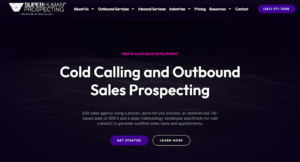
Their biggest strength is flexibility in call volume. A company can start with a small pilot of around 300 dials per month, then scale up to 10,000 dials per month as the campaign grows.
They also use a performance-based management model to maintain consistent caller quality. Top-performing SDRs help coach the middle group, while underperformers are replaced when needed. This helps the program scale without sacrificing call quality.
Industries served: 50+ B2B verticals including SaaS, manufacturing, logistics, healthcare and financial services
Caller model: US-based; H2H methodology; QA scoring on every lead; performance-stacking management
Pricing: Starts at $695 per month; scales by volume; client supplies own contact list on entry-level plans
Best fit: Companies piloting cold calling for the first time or scaling volume without committing to an enterprise-tier retainer
Frequently Asked Questions
What is the difference between a cold calling center and a cold calling agency?
A cold calling center typically operates on a shared-agent, volume-driven model where multiple clients share a pool of callers. A cold calling agency operates on a dedicated-agent model where callers are assigned to specific client accounts with deeper ICP training and a defined qualification methodology. For complex B2B sales, the agency model generally produces higher-quality leads at a higher program cost.
Are US-based cold calling centers worth the higher cost?
For B2B sales targeting North American buyers, yes in most cases. US-based callers produce higher connection rates, handle industry-specific objections more effectively and build rapport faster in complex conversations. The cost premium over offshore alternatives is typically $2,000 to $4,000 per month. For high-value deals, that premium pays back quickly in lead quality and close rate.
How many dials should a cold calling center make per day?
A typical B2B cold calling center averages 80 to 150 dials per SDR per day depending on the dialing technology and list quality. Higher dial volumes are achievable with power dialers but often come with lower contact quality. The metric worth tracking is live conversations per day, not total dials. A center making 200 dials and reaching 8 decision makers is underperforming compared to one making 100 dials and reaching 15.
What show rate should I expect from a cold calling center?
Industry average show rates from cold calling programs sit between 30% and 40%. Programs with rigorous pre-call qualification and post-call QA review reach 60% to 70%. If a center cannot give you their show rate across the full client base, ask why. The number is either not tracked or not favorable to share.
How do I know if a cold calling center is performing well?
Track four metrics: connect rate (calls reaching a live decision maker), conversation rate (live contacts who engage in a real conversation), qualification rate (conversations that produce a qualified lead) and show rate (booked meetings where the prospect actually shows up). A center performing well shows improvement across all four over the first 60 days of a program.
What industries benefit most from cold calling centers?
Cold calling centers produce the best results in industries with high deal values, identifiable decision makers and complex solutions that benefit from live conversation. Top industries include enterprise SaaS, managed IT services, commercial real estate, logistics and supply chain, financial services, staffing and recruiting and industrial manufacturing.
Choosing Between a Cold Calling Center and a Dedicated Agency
The right choice between a traditional cold calling center and a dedicated B2B outbound agency depends on your deal size, your buyer’s sophistication level and what you need the conversations to accomplish.
For simple, high-volume outreach with a low deal value and a broad market, a call center model with shared agents and script-driven calling is a reasonable fit. For complex B2B sales where the first call needs to qualify a real buying conversation, a dedicated cold calling agency with a documented methodology and a post-call QA process is the better investment.
The companies above cover both ends of the spectrum and the range in between. The right one is the one whose model matches what your buyers actually need to hear before they agree to a meeting.