
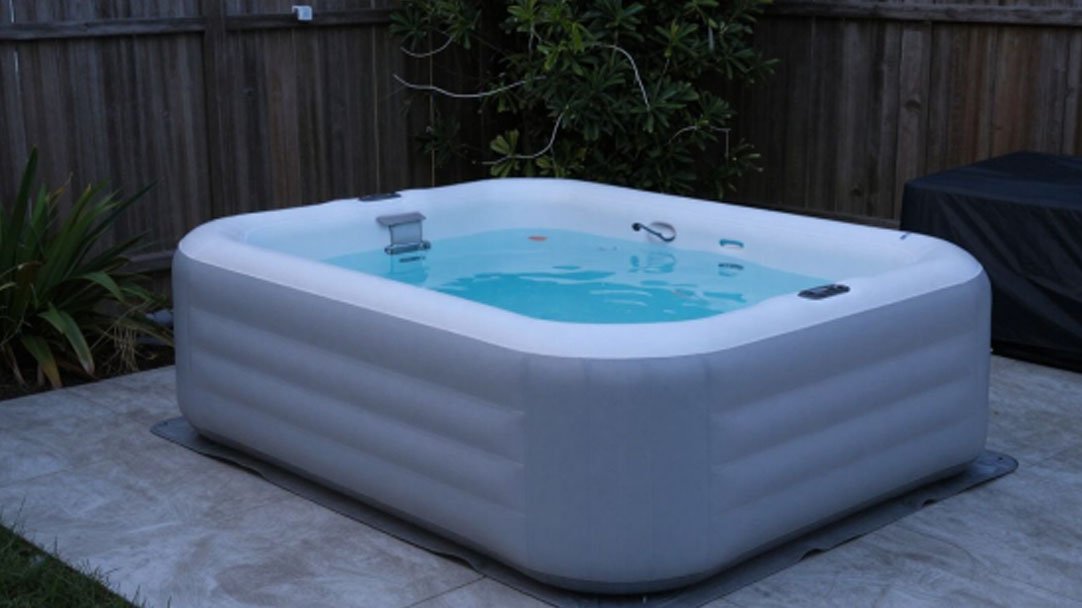
An inflatable hot tub loses warmth through several routes at once. Outdoor air, moving water, and an uncovered surface all draw heat away. Once those causes are clear, a lazy spa is easier to keep comfortable without running the heater constantly.
Why water cools faster outdoors
Water holds heat well, but it also releases that heat steadily when the surrounding air is colder. An outdoor tub has a large exposed surface, and its soft walls usually provide less insulation than a permanent, built-in structure. The greater the difference between water and air temperature, the harder the heater must work to maintain warmth.
A tub also cools from below and around its sides. Cold paving, damp ground, and drafts can pull warmth away even when the water surface is covered. Small losses add up over several hours, especially overnight.
How wind, shade, and air temperature affect heat retention
Wind strips warm air from the surface of the tub and increases cooling around the outer walls. Shade can be useful during a hot afternoon, but a shaded area stays colder after sunset and may leave the water slower to recover. The air temperature remains the strongest outdoor influence, particularly during winter.
Shelter does not need to mean a fully enclosed structure. A fence, screen, or carefully chosen corner can reduce drafts while leaving enough space for safe access and ventilation. The tub should never be squeezed against an obstruction simply to block the wind.
The role of evaporation and exposed water
Evaporation is one of the fastest ways for warm water to lose energy. Every time the cover comes off, moisture escapes from the surface and carries heat with it. Splashing, open air jets, and a low water level can increase the exposed area and speed up that loss.
The cover should be replaced as soon as bathing ends. Towels, drink containers, and accessories should stay clear of the water when the tub is not in use, since a clean, calm surface loses less heat and is easier to protect.
When heat loss indicates a cover or equipment problem
A gradual temperature drop is normal in cold weather, but a sudden or unusually large change deserves attention. A cover that no longer sits flat may have a damaged core, trapped moisture, or a split seam. Weak water flow can also prevent the heater from transferring warmth properly.
The owner should compare the tub’s behavior over similar weather conditions. If the heater runs for long periods without raising the temperature, the filter, inlet, water level, and error display should be checked before the system is used again.
Choose the best location and improve insulation
Location affects heat retention before the tub is even filled. A sheltered, stable site reduces exposure to wind and limits heat loss through the base. It also makes routine covering, cleaning, and safe access much easier.
Positioning your lazy spa away from wind
The best position is usually a sheltered part of the yard with room around the equipment and tub. Fences and walls can block direct drafts, but they should not prevent airflow around the heater or make maintenance awkward. A simple windbreak can help if it is stable and safely placed.
The tub should not sit beneath branches that shed leaves or where rainwater collects. A cleaner location means less debris in the water and fewer interruptions while the cover is open.
Using a level, solid, and insulated base
An inflatable tub needs a firm, level base that supports its full footprint. Uneven ground can place stress on the walls and create uncomfortable water depth differences. Soft soil may shift after rain, while rough surfaces can damage the underside.
The base should also be dry and free of sharp objects. A suitable groundsheet or protective mat adds a little separation from cold and damp surfaces, while preserving a stable foundation for the filled tub.
Adding ground insulation beneath the tub
Ground insulation reduces the amount of warmth moving from the base into cold paving or soil. The Lay-Z Spa Miami EnergySense Airjet is described with multi-layered EnergySense insulation, but any model still benefits from being placed on an appropriate, protected surface.
Owners should follow the model instructions when choosing a mat, pad, or other insulating layer. The material must not create instability, block equipment access, or interfere with drainage around the tub.
Avoiding heat loss near walls, trees, and cold surfaces
A wall can shelter a tub from wind, yet it may also shade the water and limit access to the cover. Trees bring similar trade-offs, adding shade and falling debris. Cold concrete and exposed stone can draw warmth from the underside for hours.
A practical site balances shelter with open working space. There should be enough clearance to fit the cover, inspect connections, and reach the controls without stretching or climbing.
Use the hot tub cover correctly
The cover is the simplest defense against heat loss. It slows evaporation, keeps debris out, and limits contact between warm water and cold air. Its effect depends on its fit and on how consistently it is used.
Selecting a well-fitting insulated cover
A good cover should match the tub’s shape and rest evenly around the rim. Gaps allow warm air to escape and let wind lift the edges. Insulation inside the cover matters, but a damaged or poorly fitted cover can still perform badly.
The cover should be light enough to handle safely but strong enough to keep its shape. If it sags into the water, its condition and support should be checked rather than ignored.
Closing the cover between uses
The cover should go on whenever the tub is not actively being used, including during short pauses. A few minutes of exposure may seem harmless, but repeated openings allow heat and moisture to escape. Keeping the surface covered also reduces the cleaning load.
Two people may be needed to remove or replace a large cover safely. The cover should be placed on a clean support or cover lifter instead of dragged across the ground.
Removing standing water and snow from the cover
Rain and snow add weight, press the cover downward, and can damage its shape. Standing water may also seep through weak seams or remain trapped against the insulation. Removing it promptly protects both the cover and the tub rim.
A soft brush or suitable cover pump is safer than a sharp tool. Heavy snow should be cleared gently, while ice should be allowed to loosen rather than being struck against the cover.
Checking the cover for gaps, damage, or trapped moisture
The cover deserves a quick inspection every few weeks. Owners should look for split stitching, flattened insulation, cracked straps, and edges that no longer meet the rim. A waterlogged cover often feels unusually heavy and may lose much of its insulating ability.
Small problems are easier to address before cold weather arrives. A temporary repair may limit exposure, but a badly damaged cover should be replaced according to the manufacturer’s guidance.
Make the heating system work more efficiently
Heating efficiency depends on more than the heater itself. The system must receive clear water flow, and the tub should not be asked to recover from unnecessary heat loss. A steady routine usually works better than repeated, large temperature changes.
Setting a consistent water temperature
A stable setting avoids frequent swings between cold water and bathing temperature. The ideal temperature depends on the household routine, weather, and manufacturer limits. If the tub is used often, maintaining a moderate setting may be more practical than reheating from cold each time.
The control panel should be checked rather than adjusted repeatedly. Sudden changes make it harder to judge normal heating behavior and can increase the time the heater operates.
Heating the tub before you plan to use it
Heating should begin early enough for the water volume and outdoor conditions. Starting at the last minute often leads to disappointment, especially after a cold night. The cover should remain in place while the water warms.
A planned session also gives the owner time to check the water level and clarity. If recovery is unusually slow, that warning can be addressed before guests arrive.
Using economy or timer settings when available
Timer functions can align heating with the owner’s normal bathing schedule. The Lay-Z Spa Miami EnergySense Airjet includes a Power Saving Timer that allows temperature scheduling up to 40 days in advance, according to its product description. This can help avoid heating at times when the tub is unlikely to be used.
The schedule still needs occasional review as routines and weather change. A timer is useful only when it reflects real use, so an unused heating window should be removed rather than left running.
Keeping the filter, water flow, and heater inlet clear
Restricted flow makes heating less effective and may trigger an error. The filter should be clean, the inlet should be free of leaves and debris, and the water level should stay within the stated range. Connections also deserve a quick visual check for kinks or obstructions.
The owner should stop and consult the manual if an error code persists. Running a system with poor flow can turn a simple filter issue into a larger equipment problem.
Reduce heat loss while using the tub
Some heat loss is unavoidable during bathing. The goal is to limit the time and conditions that make it worse. Small habits can keep the water warmer without making a session feel restricted.
Limiting how long the cover stays open
The cover should be removed only when people are ready to enter. Leaving it folded back while preparing drinks or towels exposes the entire surface to cold air. A nearby, clean place to rest the cover makes quick replacement easier.
The cover should never be placed directly on wet or dirty ground. Keeping it clean helps preserve the seal when it returns to the tub.
Replacing the cover during breaks
A pause between sessions is still a chance for heat to escape. If bathers leave for more than a few minutes, replacing the cover helps hold warmth in the water. It also limits debris entering while nobody is watching the tub.
The cover should be secured without forcing straps or clips. When bathing resumes, it can be removed carefully and kept clear of pathways.
Keeping the water level within the recommended range
The right water level helps the heater and circulation system operate as intended. Too little water can expose inlets or reduce flow, while too much can increase splashing and overflow. The marked range in the manual should guide filling.
Bathers should account for displacement when several people enter. A sensible level reduces spills, keeps the rim drier, and limits the amount of warm water lost during use.
Avoiding unnecessary air jets and bubbles in cold weather
Air jets can make a session feel lively, but they introduce cooler air into the water and increase surface movement. In cold weather, extended bubbling may cool the tub faster than expected. Short periods are usually easier to manage than continuous operation.
The jets can be switched off during quiet stretches of a session. Keeping the cover ready for breaks then helps the water recover more quickly.
Maintain the water and equipment
Clean water supports reliable circulation and heating. Poor maintenance can lead to blocked filters, scale, weak flow, or repeated error messages. A simple routine protects comfort as well as the equipment.
Cleaning or replacing filters regularly
Filters collect hair, dust, oils, and other debris that would otherwise move through the system. They should be rinsed on the schedule recommended for the model and checked more often after heavy use. A filter that remains discolored or restricted may need replacement.
Cleaning should be gentle enough to preserve the filter material. Keeping a spare available can prevent the temptation to run the tub with a neglected or visibly damaged filter.
Balancing water chemistry to protect the heater
Balanced water is kinder to the heater, pipes, and liner. Testing should follow the product instructions, with adjustments made carefully rather than by guesswork. The water should be treated after filling and checked regularly during use.
The Lay-Z Spa Miami EnergySense Airjet product description says its included ChemConnect dispenser gradually releases chlorine. That feature does not remove the need to test the water, since conditions change with use, weather, and refill frequency.
Preventing scale buildup in the heating system
Hard water can leave mineral deposits inside components and around water passages. Scale may reduce flow and make heat transfer less efficient over time. The owner should use only treatments approved for the model and local water conditions.
Regular draining and cleaning can reduce residue before it becomes difficult to remove. The manual should determine which descaling products are safe, because an unsuitable chemical can damage the system.
Checking for leaks, weak water flow, or error codes
A leak may lower the water level and make the heater work harder. Weak flow can point to a dirty filter, blocked inlet, air in the system, or another fault. Error codes should be recorded before the tub is switched off so the manual or service team has useful information.
A short inspection after each refill can catch problems early. The owner should not bypass safety features or continue operating the tub when the instructions call for it to remain off.
Save energy without sacrificing comfort
Energy saving is mostly a matter of matching the tub to its routine. A lower setting, a reliable cover, and sensible scheduling can work together without making the water unpleasant. Comfort should remain the measure, not the highest possible temperature.
Choosing a practical temperature for your routine
The most useful temperature is the one that suits how often the tub is used. Occasional bathers may prefer heating before a planned session, while frequent users may value a steadier setting. The maximum temperature should never be treated as the default.
Weather changes the amount of energy required. The same setting may be relatively easy to maintain in mild weather and much more demanding during a cold, windy spell.
Comparing continuous heating with scheduled heating
Continuous heating keeps the water closer to the chosen setting but may use energy when the tub is empty. Scheduled heating can fit a predictable routine and reduce unnecessary operation. The better choice depends on use frequency, local conditions, insulation, and the equipment’s available controls.
Lay-Z Spa publishes estimated running costs based on factors such as model, water volume, weather, temperature, use, positioning, and energy tariff. Those estimates are not a promise of individual costs, so each owner should compare them with actual use.
Knowing when to lower the temperature between uses
Lowering the setting makes sense when the tub will sit unused for several days. For a short gap, a large drop may simply create a long reheating period later. The cover should remain fitted either way.
A household calendar can make this decision easier. If the next session is already planned, the owner can choose a modest setback rather than repeatedly switching between extremes.
Following the manufacturer’s safety and operating guidance
The manual should take priority over general energy-saving advice. It explains safe temperature limits, clearance, electrical requirements, water care, and the correct response to faults. Following those instructions protects people and prevents avoidable equipment damage.
The owner should also check local weather before leaving the tub unattended. Freezing conditions, storms, and power interruptions may require special preparation that varies by model.
Conclusion
An inflatable hot tub stays warm longer when heat loss is reduced at every stage, from the base and location to the cover, water care, and heating schedule. A lazy spa does not need constant maximum heating when it is sheltered, covered promptly, maintained properly, and used according to a realistic routine. Small, consistent choices usually deliver the most comfortable result with less wasted energy.
