
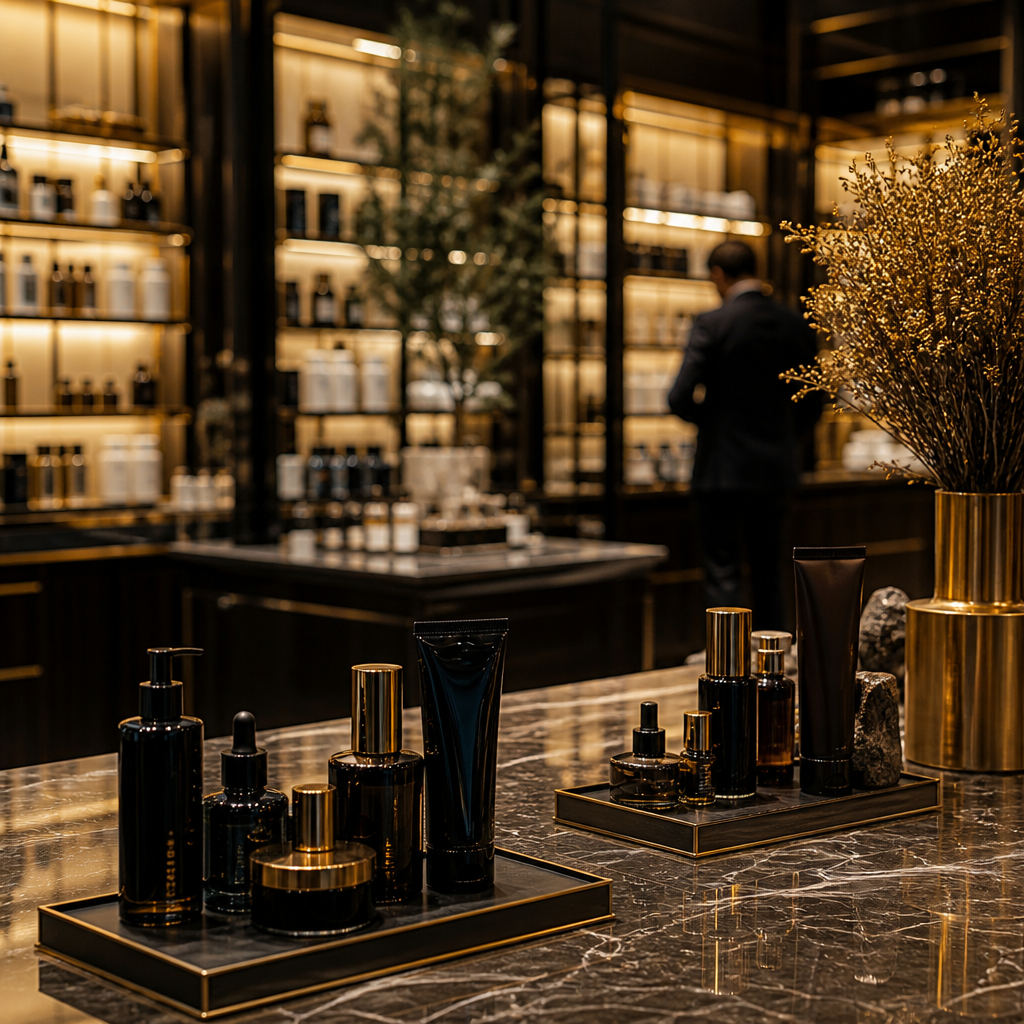
For decades, the gold standard of skincare retail lived behind glass counters on Madison Avenue — appointment-only consultations, curated product selections, and the quiet authority of a trained aesthetician who knew your skin better than you did. That model, once reserved for the ultra-wealthy, is now migrating into the digital age. Brands and platforms are borrowing its architecture — the booked ritual, the personalised recommendation, the unhurried experience — and translating it for a generation of consumers who demand both expertise and convenience. The result is a new kind of skincare retail that feels less like shopping and more like a considered ceremony.
What the Madison Avenue Model Actually Means
The phrase “Madison Avenue model” conjures images of La Mer counters and La Prairie clinics, but its defining feature was never the price point — it was the structure. Clients booked appointments. Consultants assessed individual skin concerns. Products were recommended in sequence, with clear rationale. There was no impulse buying, no overwhelming wall of options, and no pressure to grab whatever was on promotion. The experience was curated, and that curation was the product itself.
This structure created something rare in retail: trust. When a consumer feels genuinely guided rather than sold to, their relationship with a brand deepens. They return not because of a discount code but because the ritual itself has become part of their routine. This is the emotional architecture that modern skincare platforms are now attempting to replicate — and the ones doing it well are seeing remarkable loyalty metrics as a result.
The Rise of the Serum-Centric Skincare Ritual
Central to the booked-ritual model is the concept of layering — applying products in a deliberate, informed sequence that maximises efficacy. Serums sit at the heart of this philosophy. Unlike cleansers or moisturisers, serums are targeted, potent, and highly specific. Choosing the wrong one, or applying it in the wrong order, can render an entire routine ineffective or even counterproductive. This is precisely why the guided-consultation format suits serum-focused skincare so well.
Platforms that specialise in serum education and curation — like those explored through dedicated serum guides and expert roundups — are filling a gap that traditional retail never adequately addressed. Rather than presenting consumers with a shelf of forty options and leaving them to guess, these resources walk users through the logic of active ingredients, skin type compatibility, and layering sequences. It is, in essence, the Madison Avenue consultation translated into editorial content.
Why Layering Order Matters More Than Most Consumers Realise
The science of skincare application order is not arbitrary. Molecular weight, pH levels, and ingredient interactions all determine whether a product penetrates effectively or simply sits on the surface. According to Healthline’s comprehensive guide to skincare application order, the general rule is to move from lightest to heaviest texture — but the nuances go far deeper than that. Vitamin C serums, for instance, require a specific pH environment to remain stable. Retinol and exfoliating acids should rarely share the same routine without careful buffering. These are not details a department store counter can communicate in a five-minute interaction.
The booked-ritual model, whether delivered in person or through a carefully structured digital platform, creates the space for this kind of depth. It respects the consumer’s intelligence while also acknowledging that skincare formulation is genuinely complex. The best modern skincare brands understand that education is not a marketing add-on — it is the product.
Digital Platforms Adopting the Appointment-Driven Ethos
The translation of the booked-ritual model into digital retail has taken several forms. Some brands offer virtual consultations with trained skin specialists. Others have built quiz-driven personalisation engines that mirror the diagnostic process of an in-person assessment. Still others have structured their entire content strategy around ritual — publishing step-by-step guides, ingredient explainers, and routine builders that walk consumers through the same logical sequence a Madison Avenue aesthetician would follow.
What unites these approaches is a deliberate rejection of the impulse-purchase model. Rather than optimising for the fastest path to checkout, these platforms optimise for the most informed purchase decision. The assumption is that a consumer who truly understands why they are buying a product will be far more satisfied with the result — and far more likely to return.
The Role of Curation in Building Consumer Confidence
Curation is perhaps the most undervalued element of the Madison Avenue model. In an era of infinite product choice, the ability to narrow a selection to what is genuinely relevant for a specific individual is an act of service. It reduces decision fatigue, increases purchase confidence, and dramatically improves the likelihood that a product will actually work — because it was chosen for the right reasons.
This is where digital skincare platforms have a genuine structural advantage over physical retail. A well-designed recommendation engine, backed by real ingredient knowledge and skin science, can deliver a level of personalisation that even the best Madison Avenue counter cannot match at scale. The key is ensuring that the curation is genuinely expert-driven rather than algorithmically optimised for margin.
Bonjil and the New Standard of Considered Skincare
Bonjil represents a compelling example of how the booked-ritual philosophy can be embedded into a modern skincare platform. Rather than overwhelming visitors with an undifferentiated catalogue, Bonjil approaches product discovery with the same considered intentionality that defines the best in-person skincare experiences. The emphasis is on understanding the consumer’s skin, their concerns, and their existing routine before making any recommendation — a methodology that mirrors the diagnostic rigour of a professional consultation.
This approach is not simply a marketing strategy. It reflects a genuine belief that skincare outcomes improve when consumers are properly guided. In a market saturated with trend-driven launches and influencer-endorsed products, a platform that prioritises efficacy over novelty stands apart — and builds the kind of long-term trust that no promotional campaign can manufacture.
Why This Model Will Define the Next Decade of Skincare Retail
Consumer behaviour in skincare is shifting in a direction that strongly favours the booked-ritual model. Buyers are more ingredient-literate than ever before. They are more sceptical of broad marketing claims and more interested in understanding the mechanism behind a product’s efficacy. They want to know not just what a serum does, but how it does it, and whether it is appropriate for their specific skin type and concerns.
This sophistication creates a natural demand for the kind of guided, expert-led experience that Madison Avenue pioneered. The brands and platforms that can deliver that experience — whether through virtual consultations, editorial content, personalisation tools, or a combination of all three — are positioned to capture the most engaged and loyal segment of the skincare market.
Conclusion: Ritual as Retail Strategy
The Madison Avenue booked-ritual model was never really about exclusivity. It was about respect — for the complexity of skin, for the intelligence of the consumer, and for the idea that a purchase decision made with genuine understanding is worth infinitely more than one made on impulse. As that philosophy migrates into digital skincare retail, it is proving its value not just as a customer experience framework but as a sustainable business model. The future of skincare retail looks less like a shop and more like a consultation — and that is precisely as it should be.